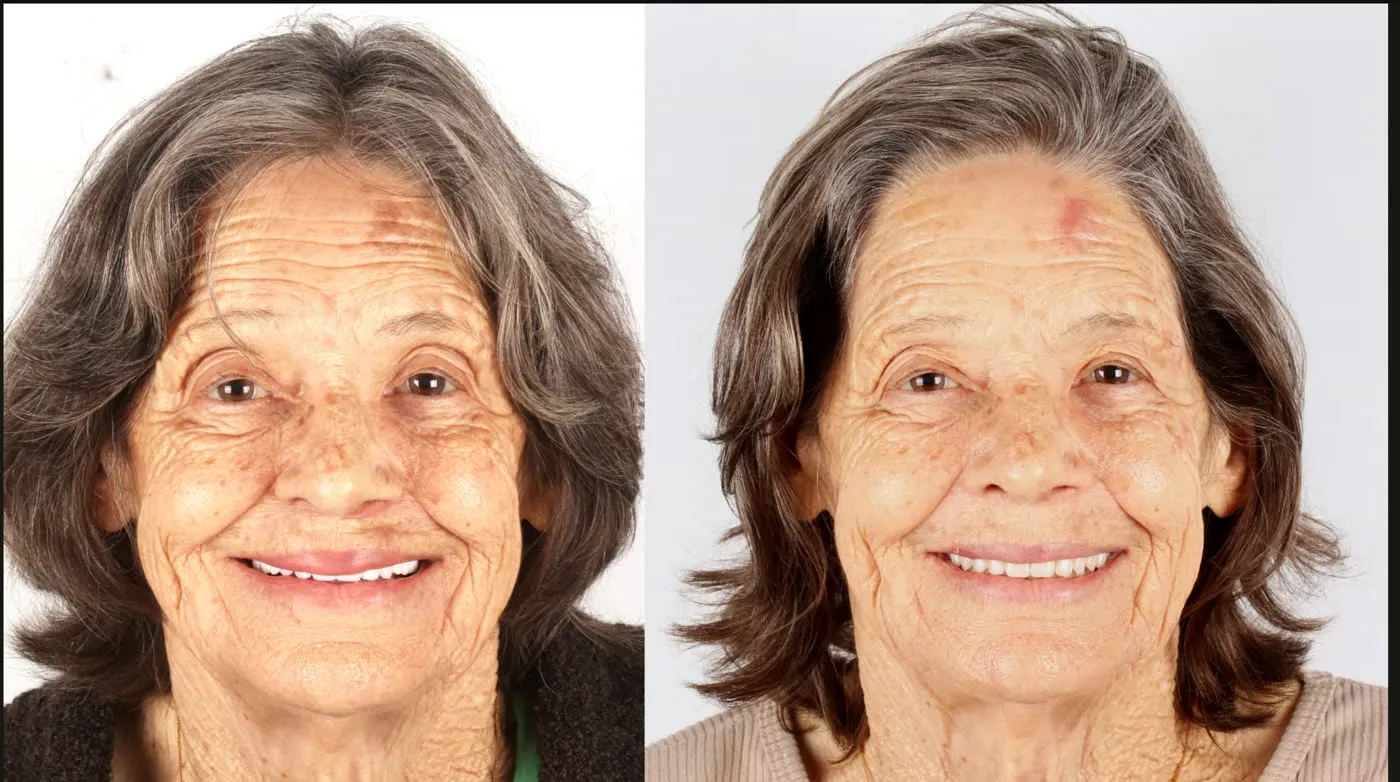
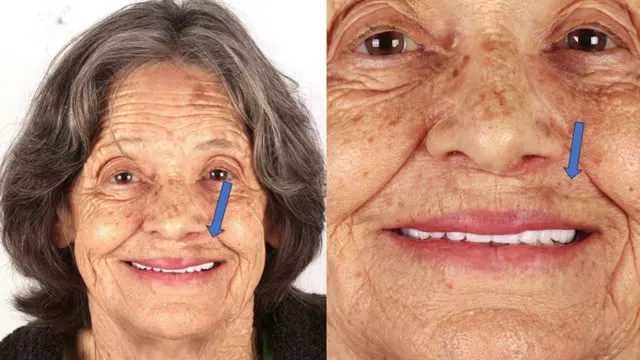
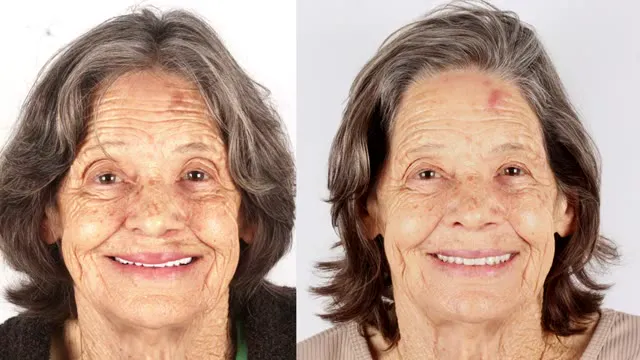
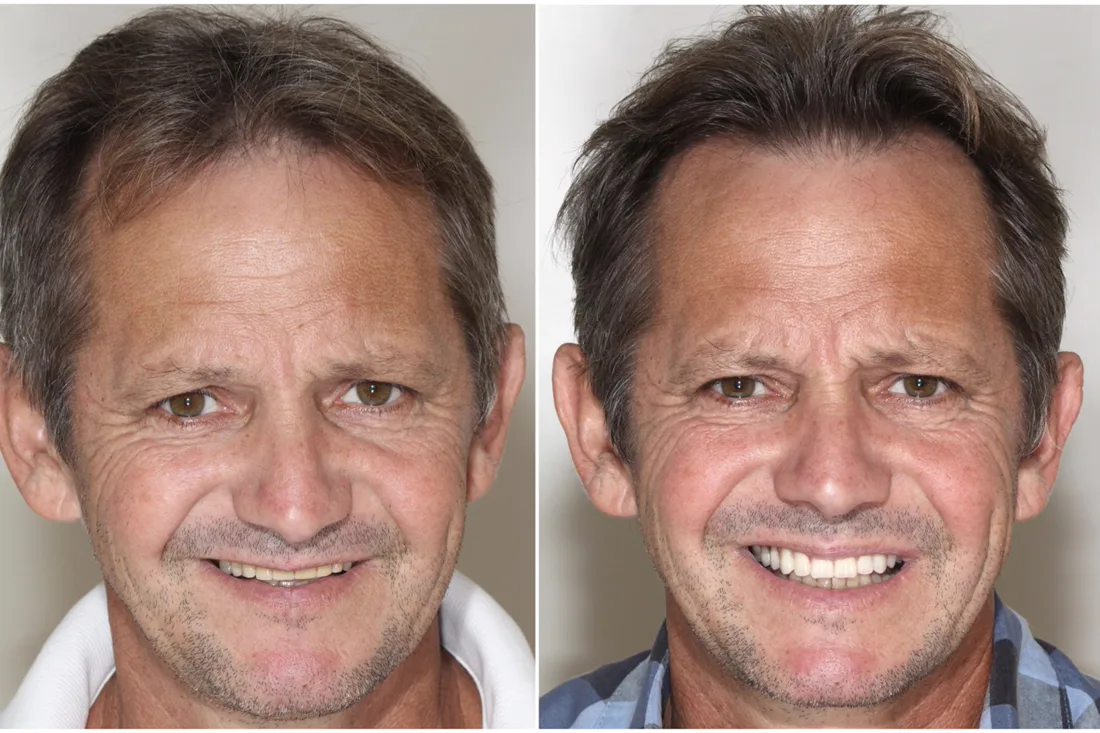
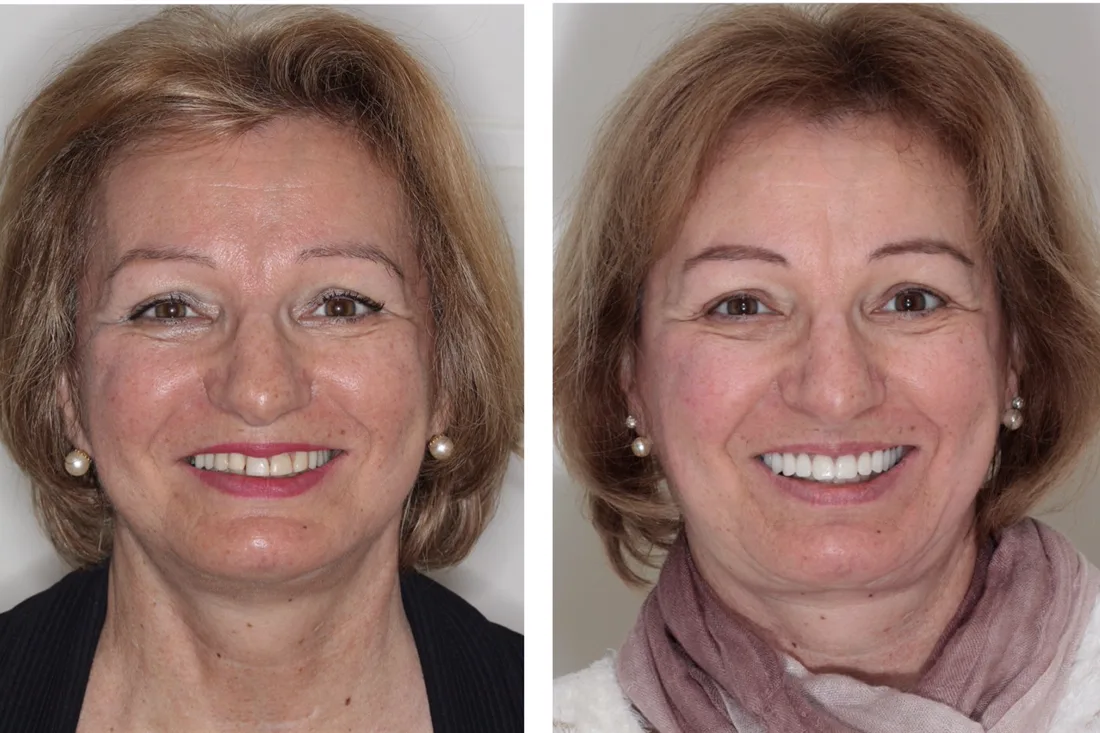
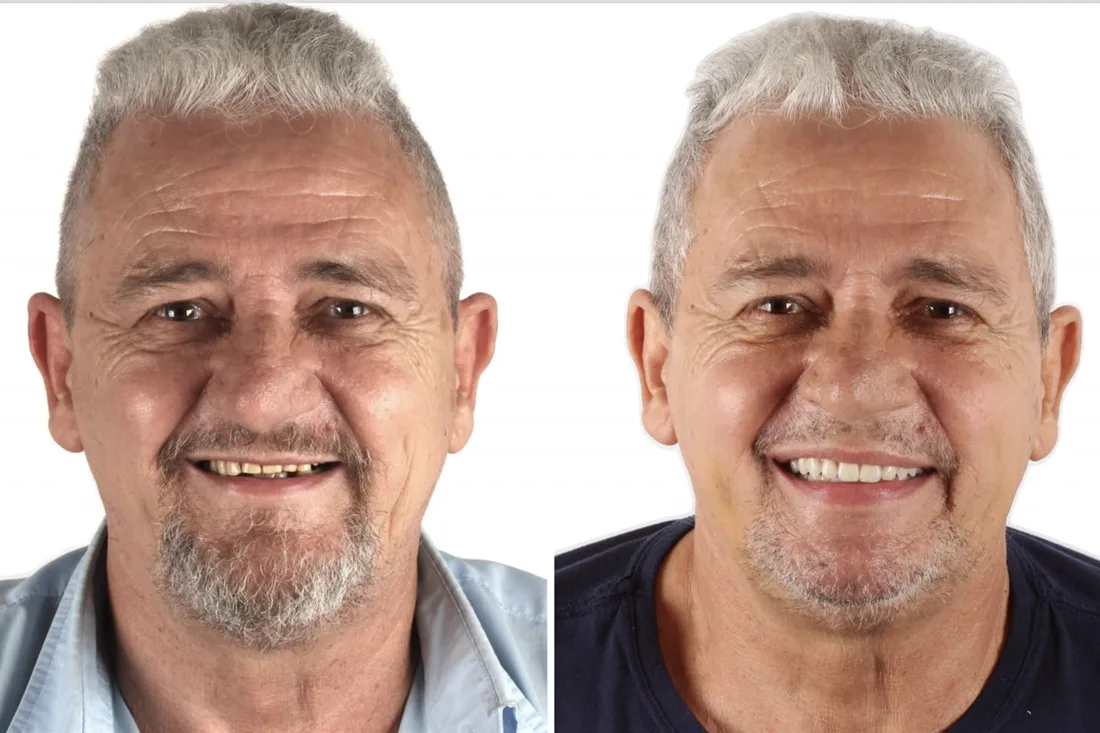
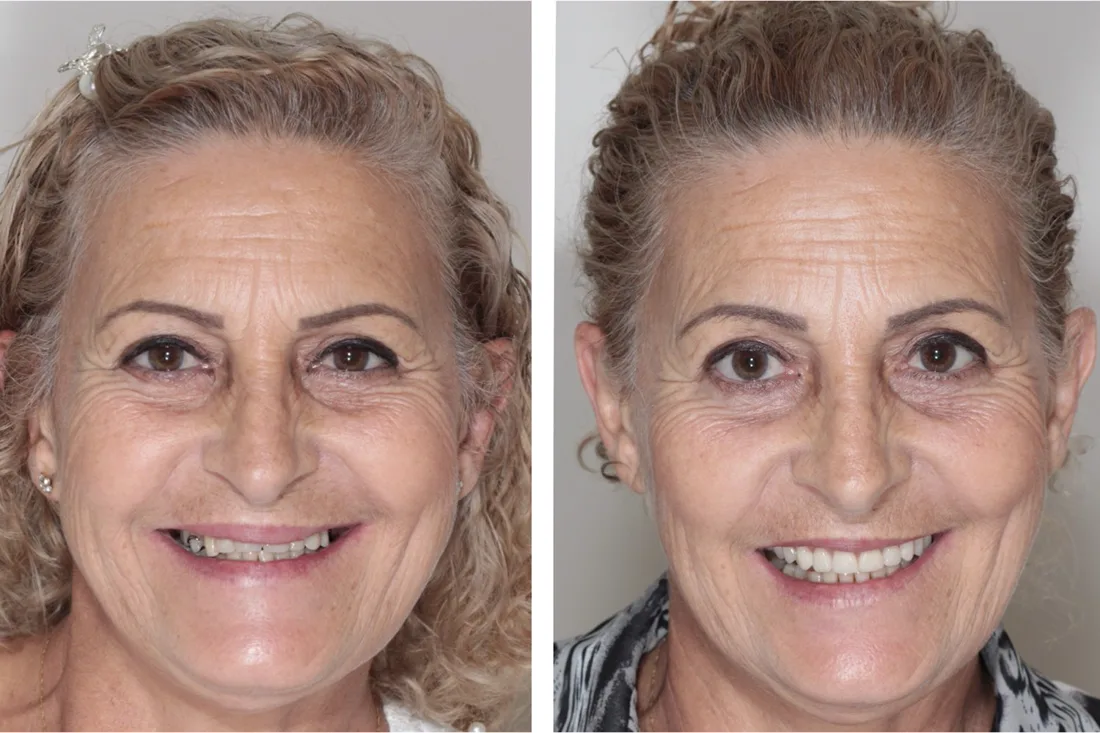
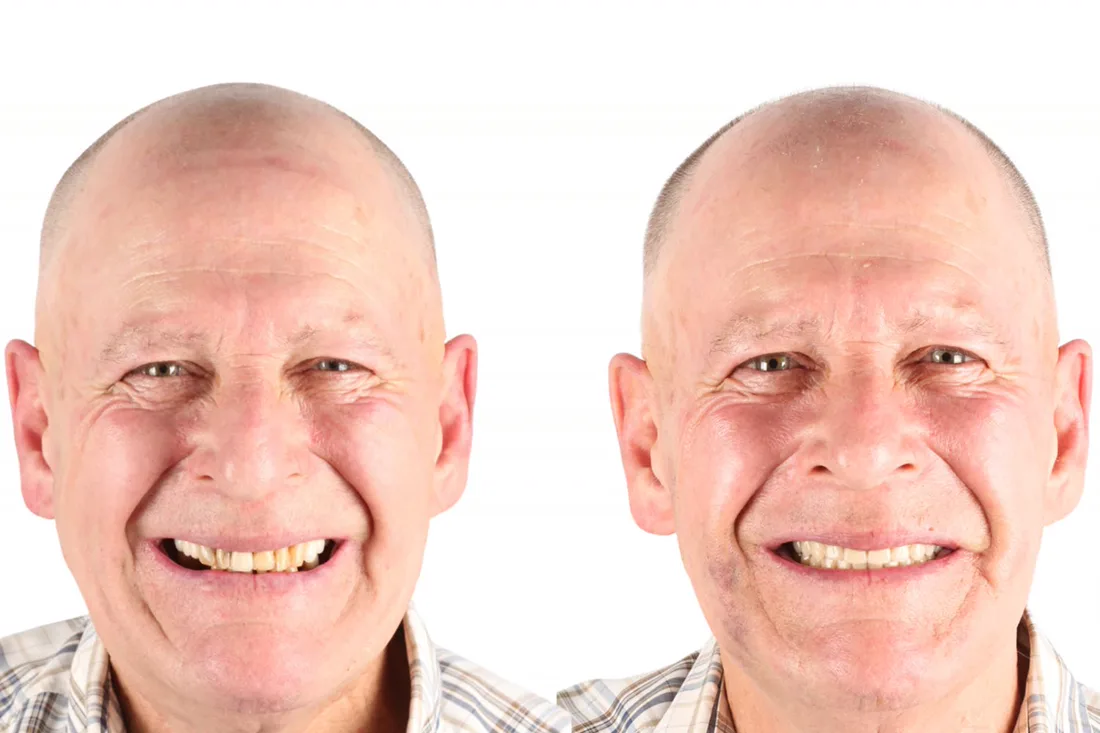
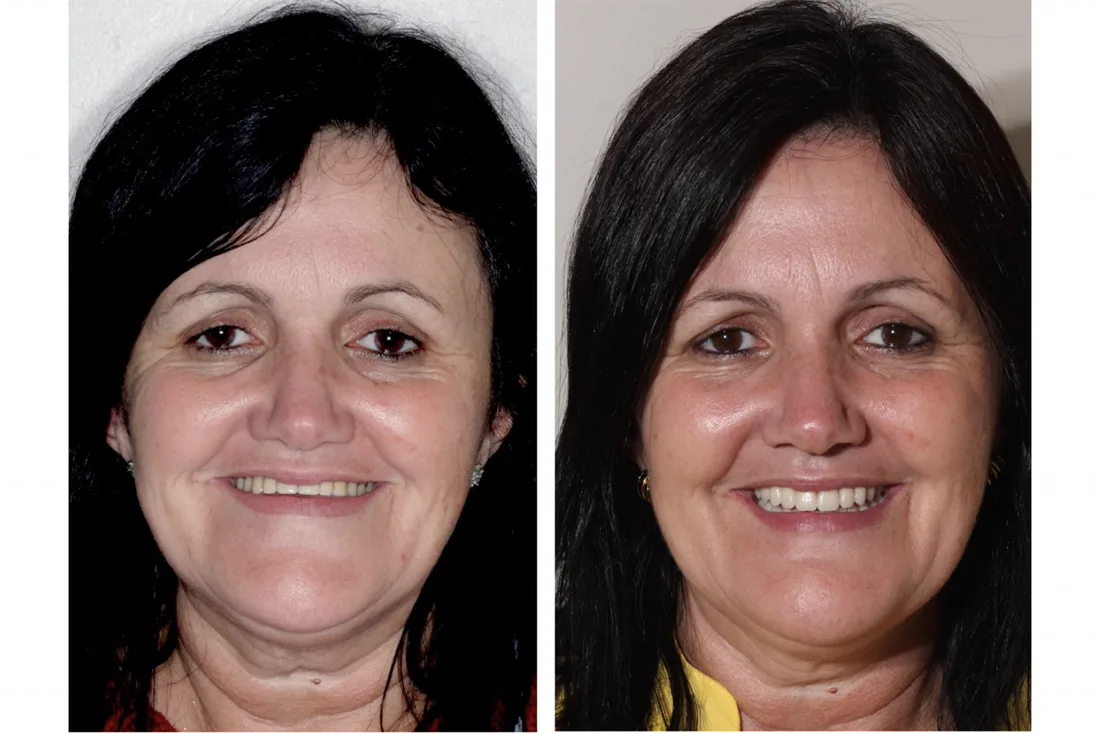
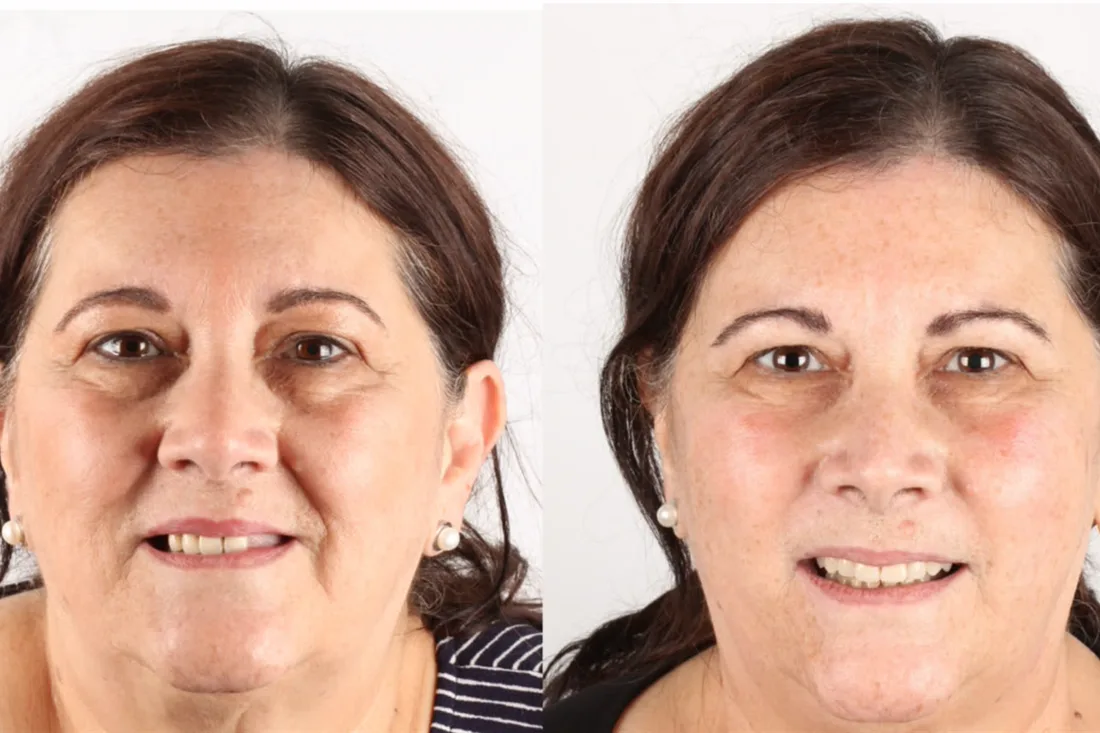
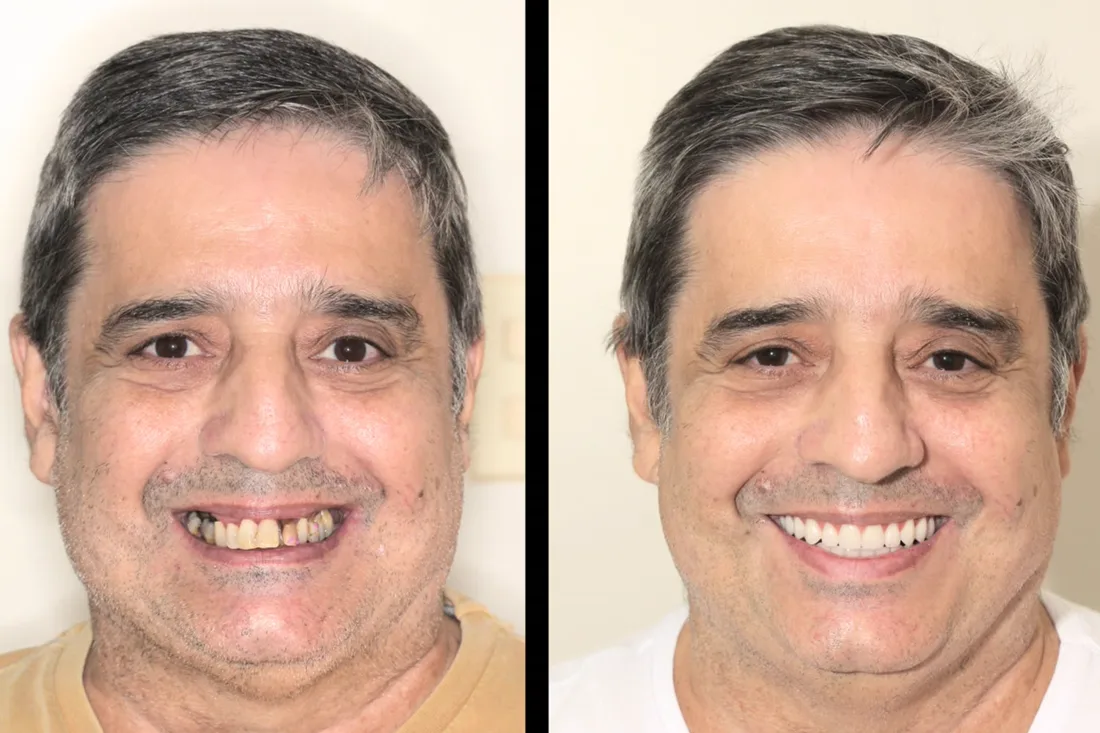
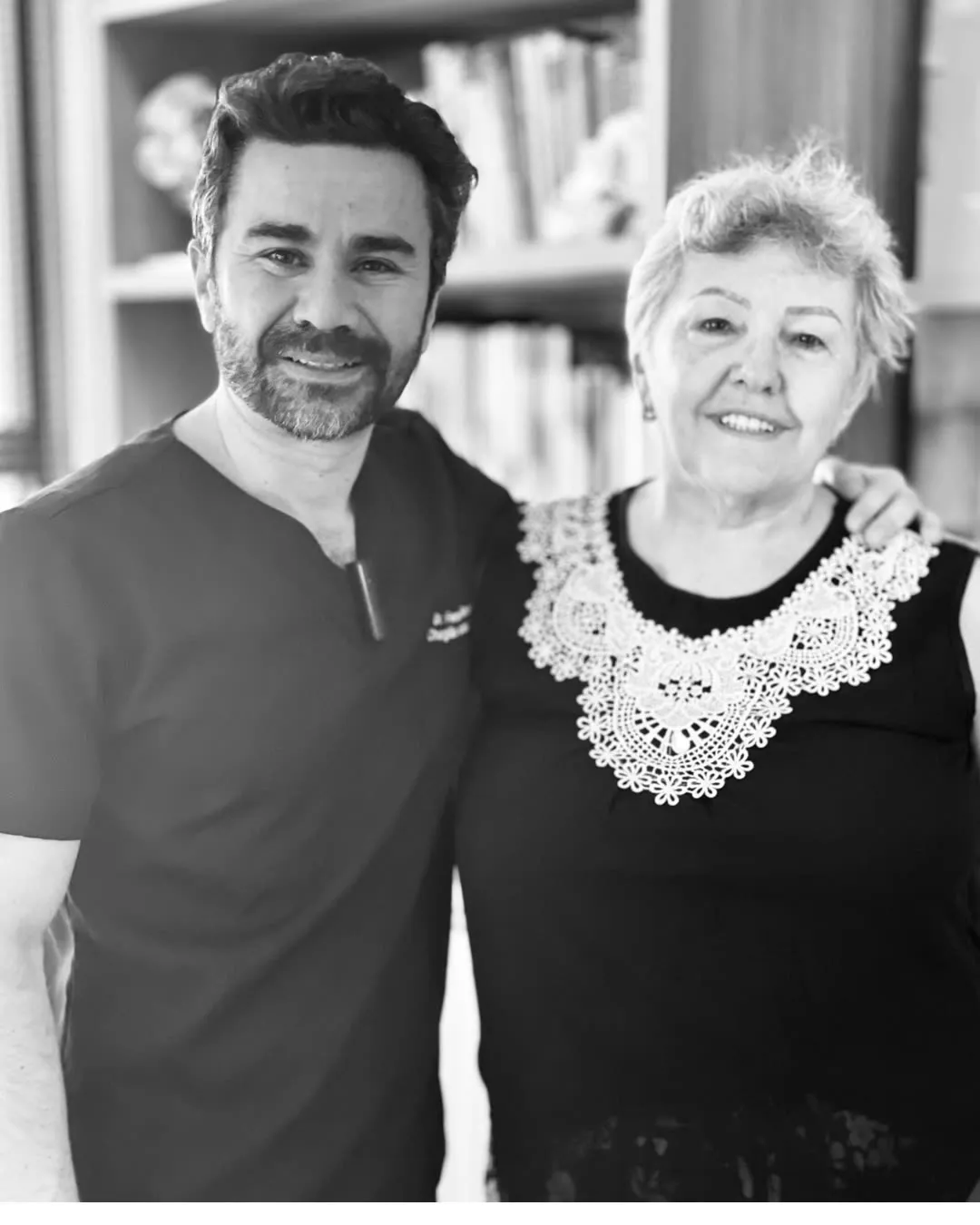
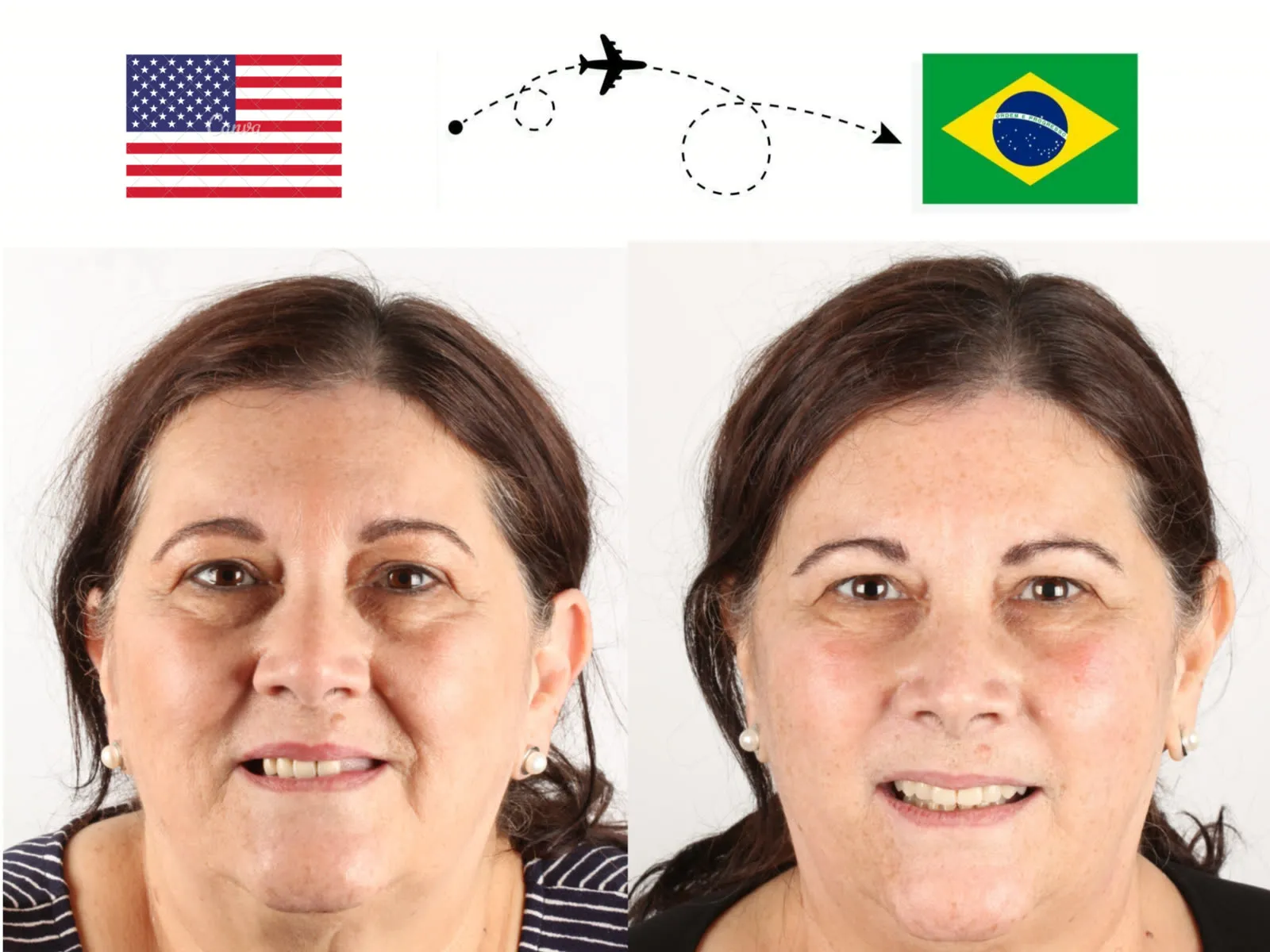
She was told there was "nothing more to be done." Today, this is how she smiles.
Fixed teeth in just a few days — even if you've been told you "have no bone." No grafting, no year-long wait. See exactly how, step by step: the full story is right below.
Real case · published in the JPDBEFOREAFTER
A real before & after. A FaceFirst approach case, documented and published in the Journal of Prosthetic Dentistry.
You probably know this story. Maybe from the inside.
First it was one tooth. Then another. At some point a denture entered your life — and with it the little tricks no one notices, but you feel: a hand in front of your smile, food cut into tiny pieces, the silent fear that it will slip at the wrong moment, in front of the wrong people.
When you finally decided to fix it for good, came the sentence that stops everything:
"You don't have enough bone for implants."
"You'll need a graft — and a 6-to-12-month wait."
"Your case is too complex."
"A denture is all that can be done."
And the plan you were offered seemed endless: three surgeries — the bone graft, the implant placement, and the re-opening — with months of healing between each, and no guarantee the graft will take. Meanwhile, life keeps passing by: the dinners you avoid, the photos where you won't open your smile, the feeling that your face has aged before your eyes.
Without teeth, the jawbone loses stimulation and resorbs over time — until a conventional implant has nowhere left to anchor.
These answers rarely mean there's no solution. They mean the solution lies beyond the conventional implant — and that's exactly where we work, every single day.
Because there's one question that changes this whole story: what if your new teeth didn't need the bone you've lost?
The turning point
Instead of rebuilding bone, we anchor where it's strong.
The jawbones resorb over the years without teeth. But there's a bone in your face that stays dense and stable for life: the zygoma — the cheekbone.
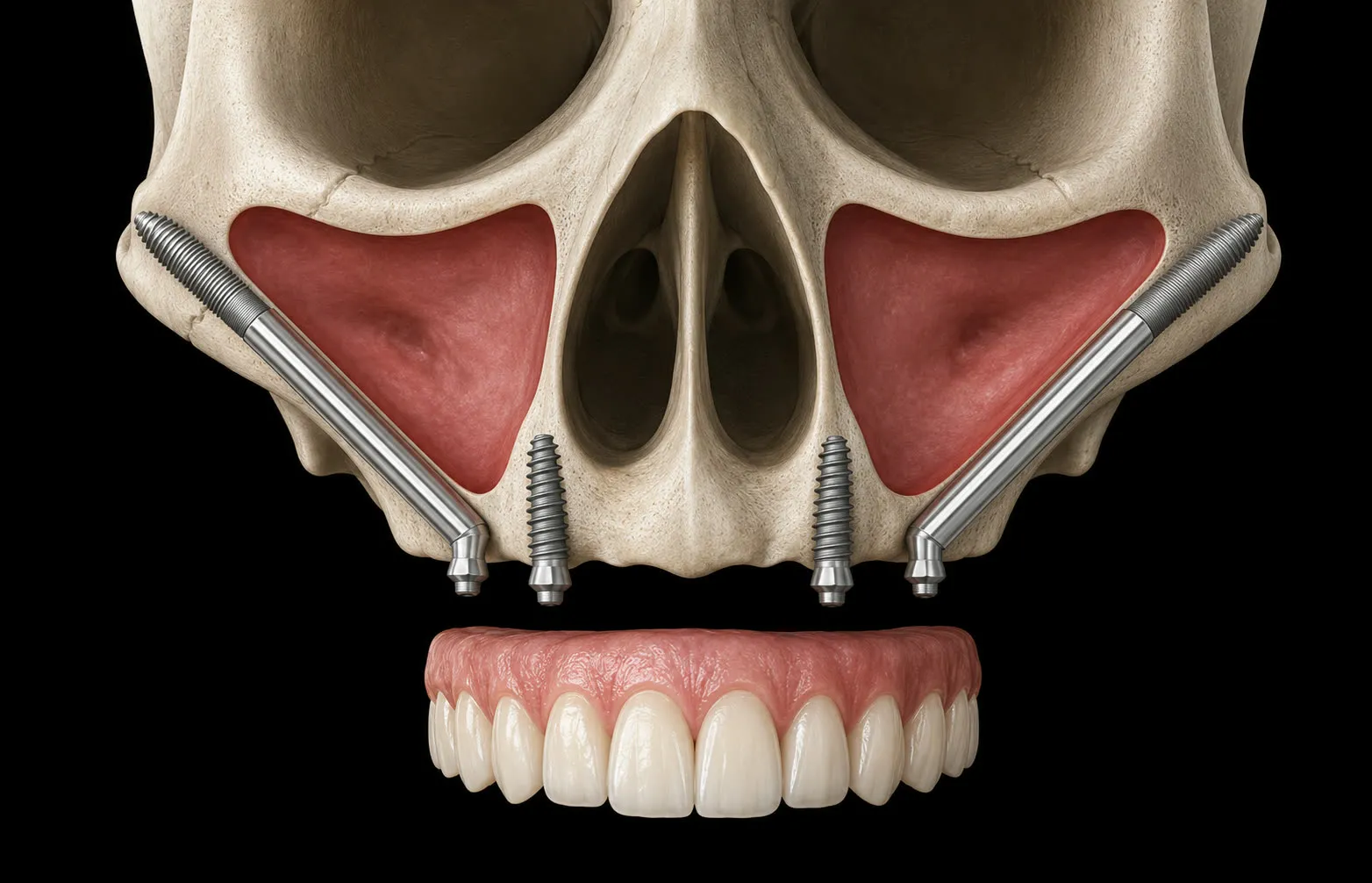
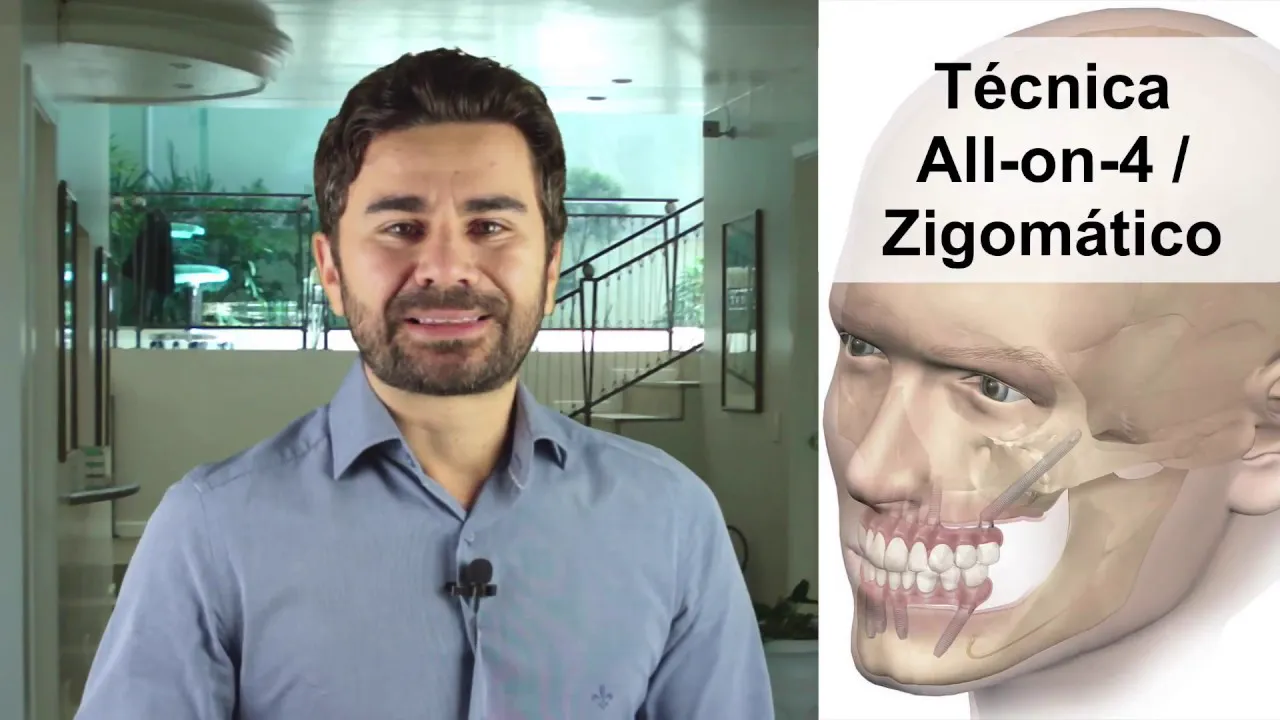
The zygomatic implant anchors right there. Combined with the All-on-4 technique, it supports a full arch of fixed teeth in a single surgery, with no grafting — with the fixed teeth placed in just a few days.
Zygomatic anchorage: the implant fixes into the bone that doesn't resorb.
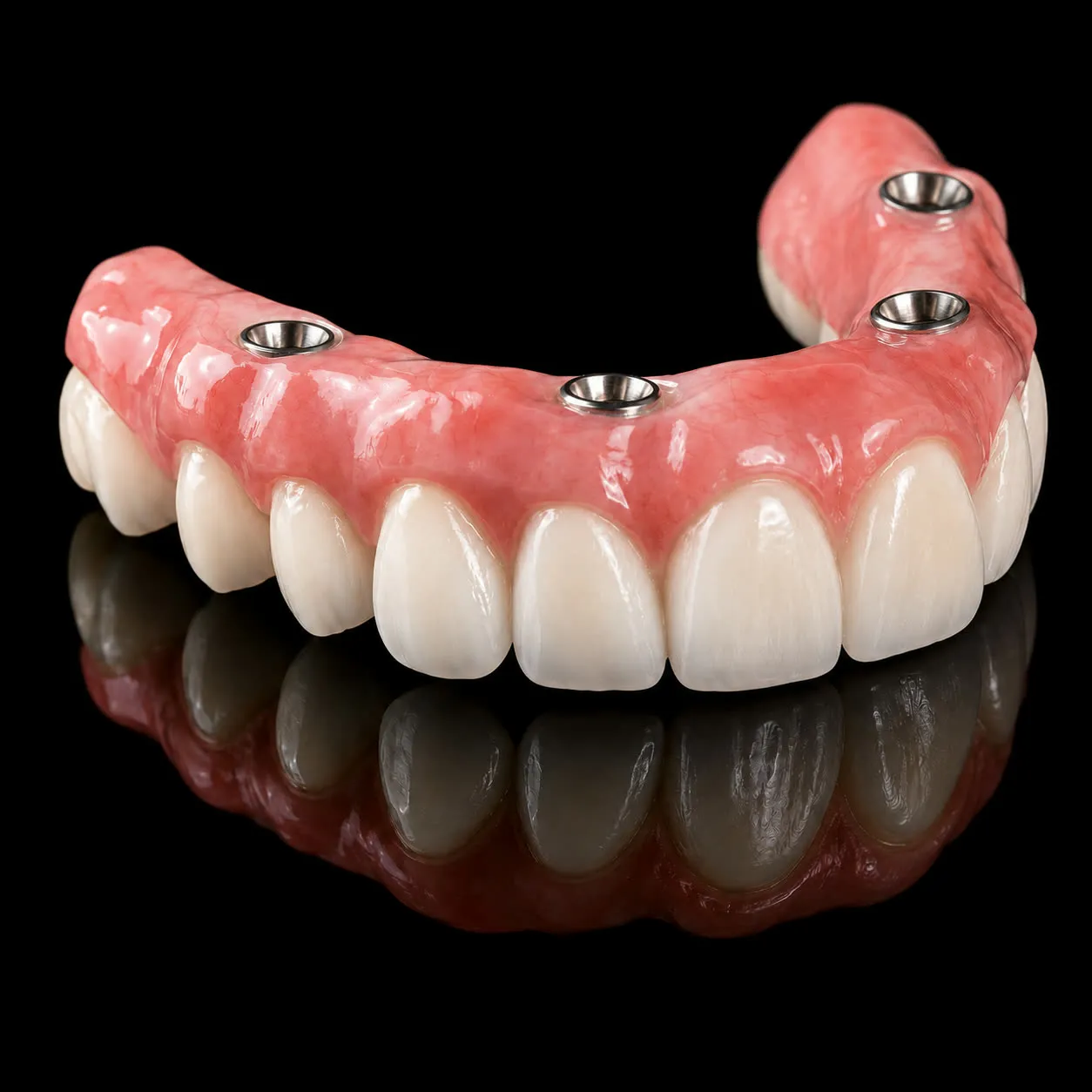
This is what you get: the full arch fixed, screwed onto the implants — no covered palate, nothing to remove at night.
01
No bone grafting
The anchorage already exists in your face.
02
Immediate loading
Fixed teeth in days, not years.
03
One surgery
Planned millimeter by millimeter before the day.
Okay — but what exactly is a zygomatic implant?
It's a longer implant, designed to anchor in the zygomatic bone. It's not experimental: it's an established technique, used for decades in the world's major rehabilitation centers for cases of severe bone loss.
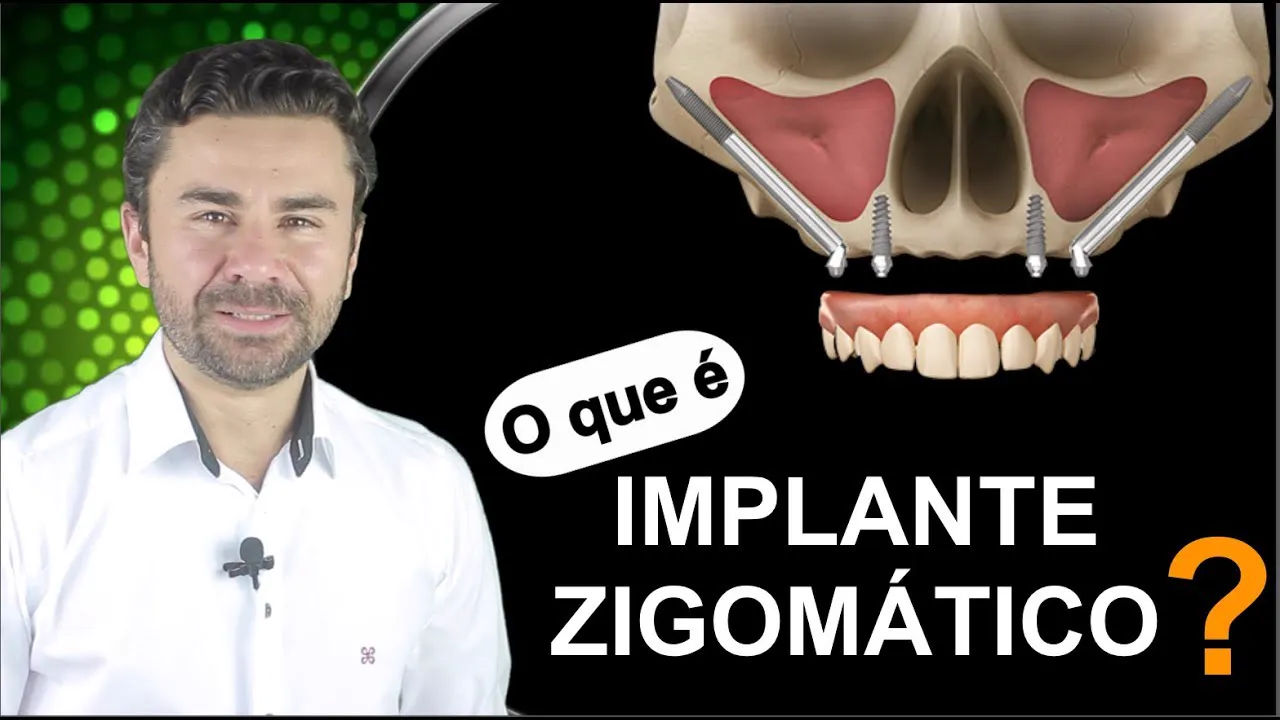
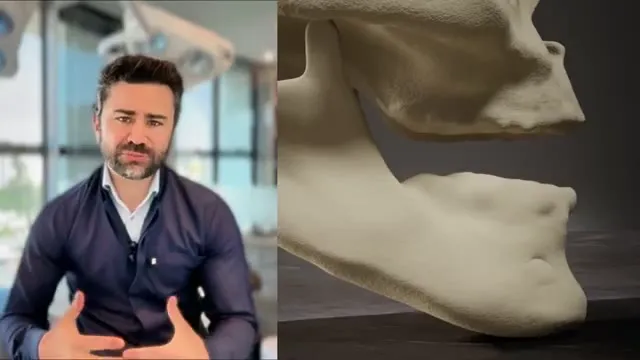
▶ The full explanation, by Dr. Fernando Giovanella himself. The page continues below — watch whenever you like. (in Portuguese)
What a zygomatic implant is — Dr. Fernando Giovanella explains
At this point, every well-informed person asks the same question. And it's exactly the right one.
The right question
"An implant in the facial bone… is that safe?"
This doubt isn't silly fear — it's common sense. The path of a zygomatic implant runs close to structures that allow no improvisation. The safety of a surgery like this doesn't live in the surgeon's confidence: it lives in the method he uses to know, precisely, where each implant goes — before he begins.
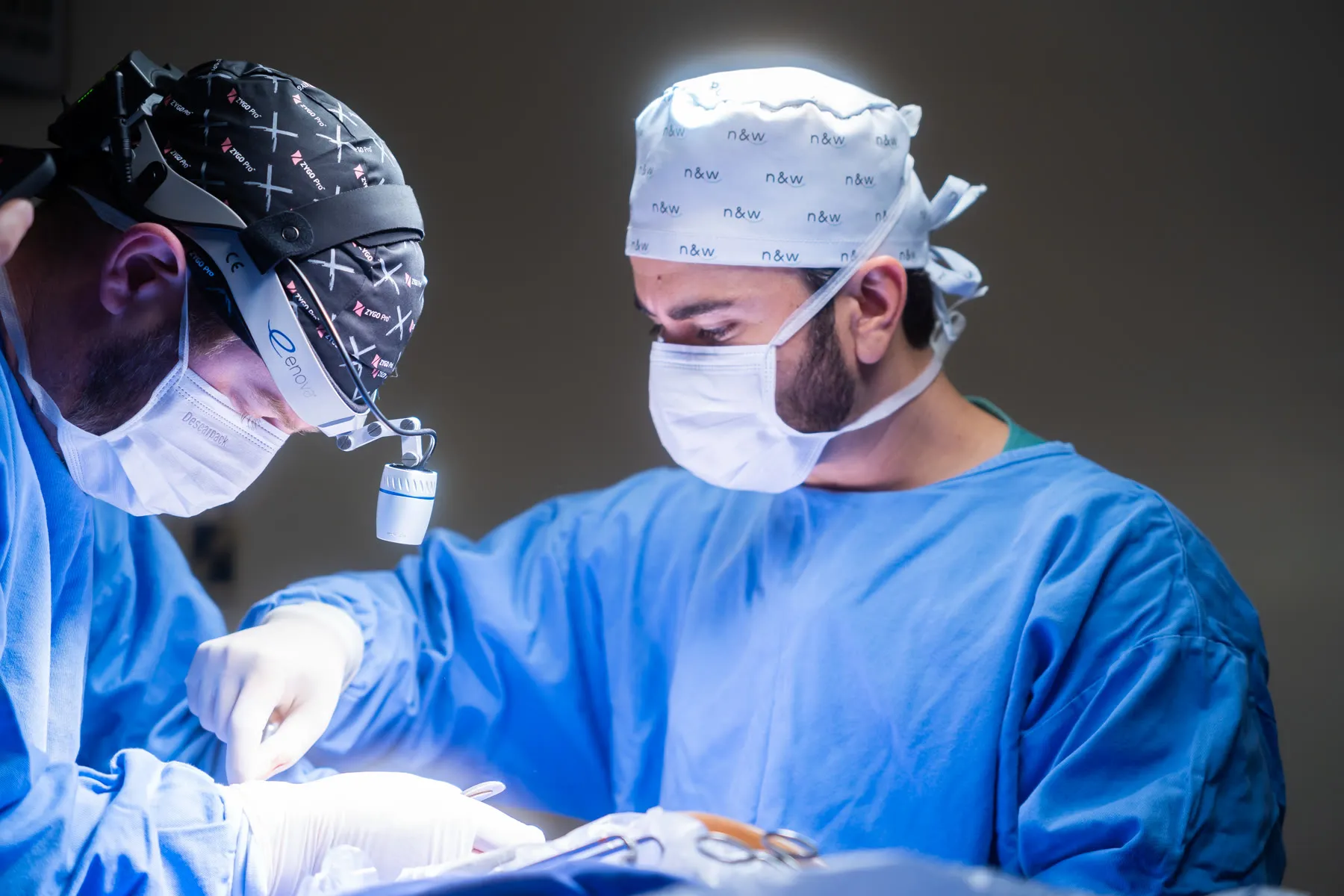
First, a distinction that matters. In the traditional path, there are three real surgeries: the graft, the implant placement, and the re-opening. In our protocol, you go through a single surgery. What happens three times isn't the surgery — it's the precision. Your case is performed three times; only the last happens on you:
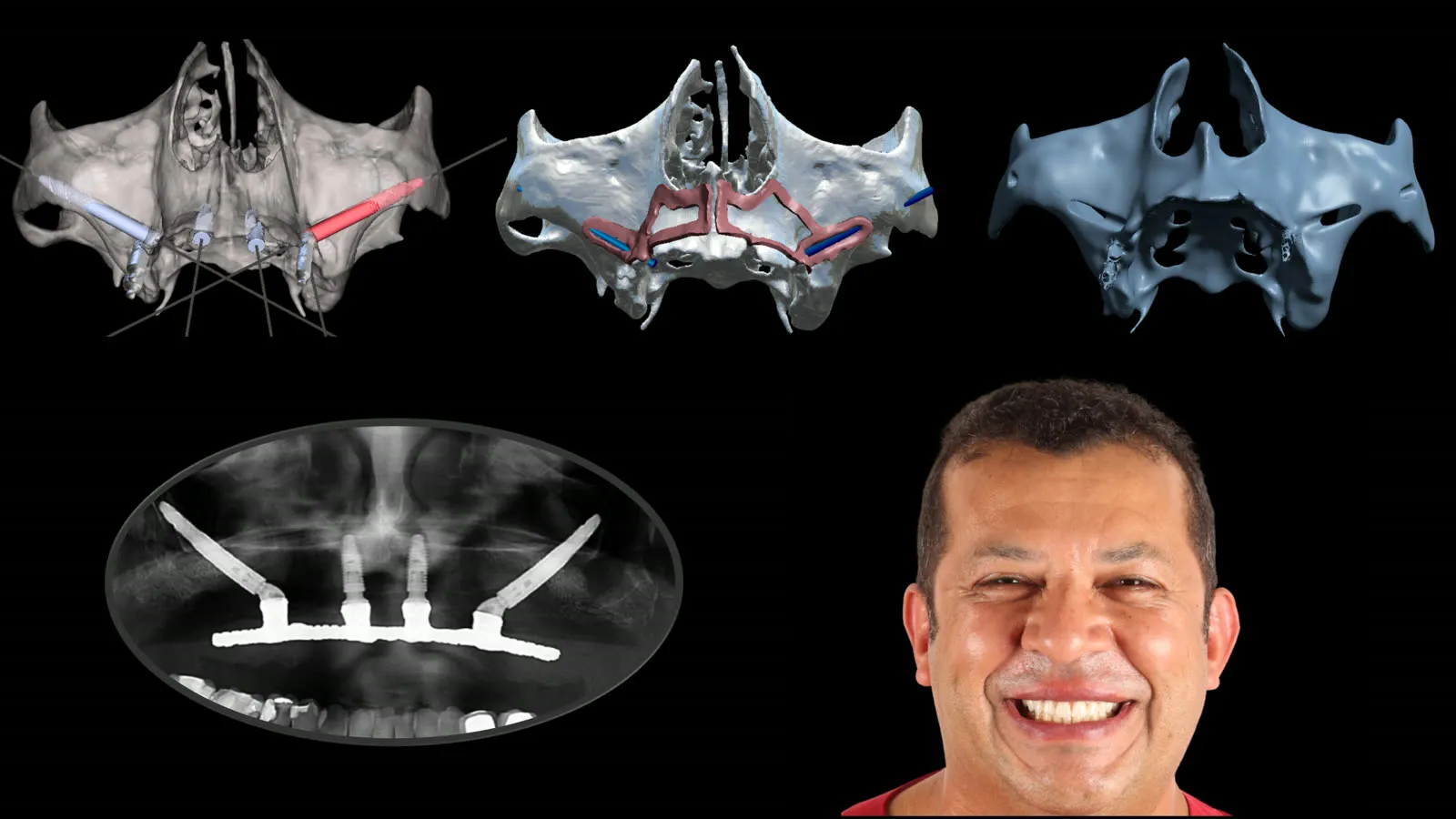
1 · SIMULATION
On the computer
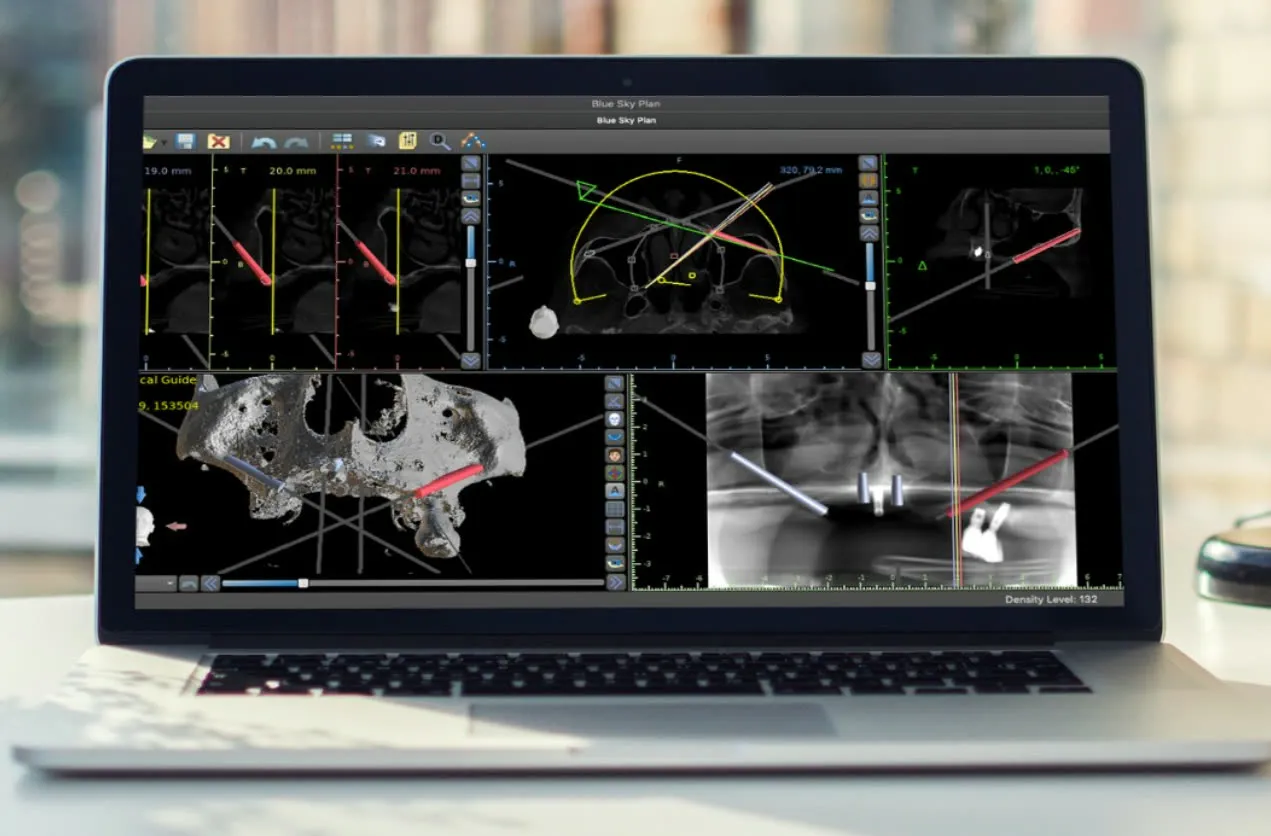
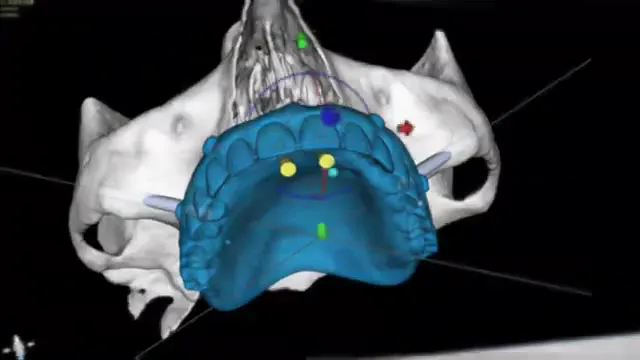
Your CT scan becomes a 3D model, and the entire surgery is simulated: the exact position of each implant, millimeter by millimeter — already thinking about the teeth that will sit on them.
2 · PROTOTYPE
On your bone, 3D-printed
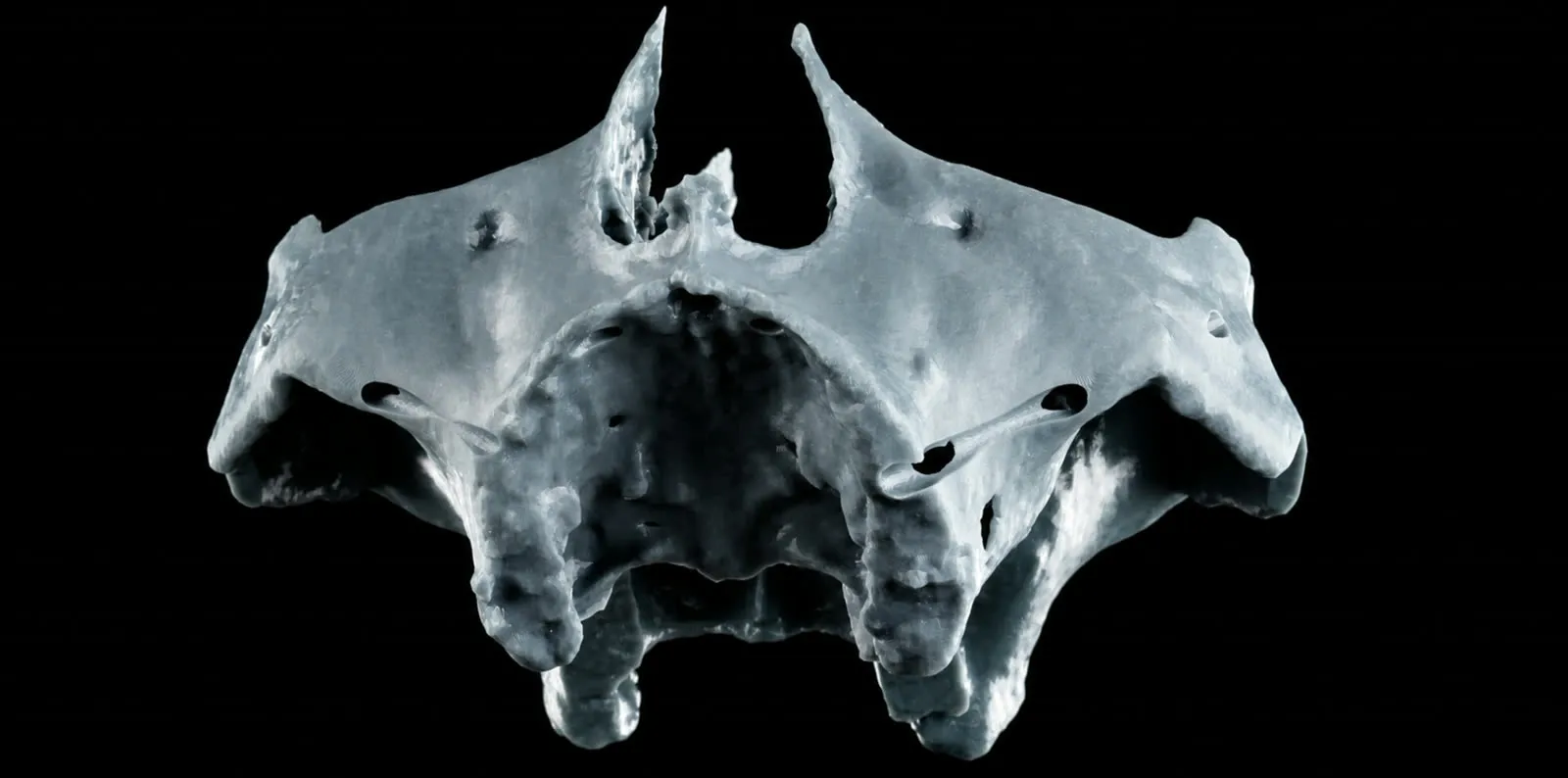
The CT scan also becomes a physical replica of your bone, 3D-printed — which Dr. Fernando Giovanella literally holds in his hands: he physically checks everything defined on screen, before your day.
3 · YOU
With the SkinGuide®
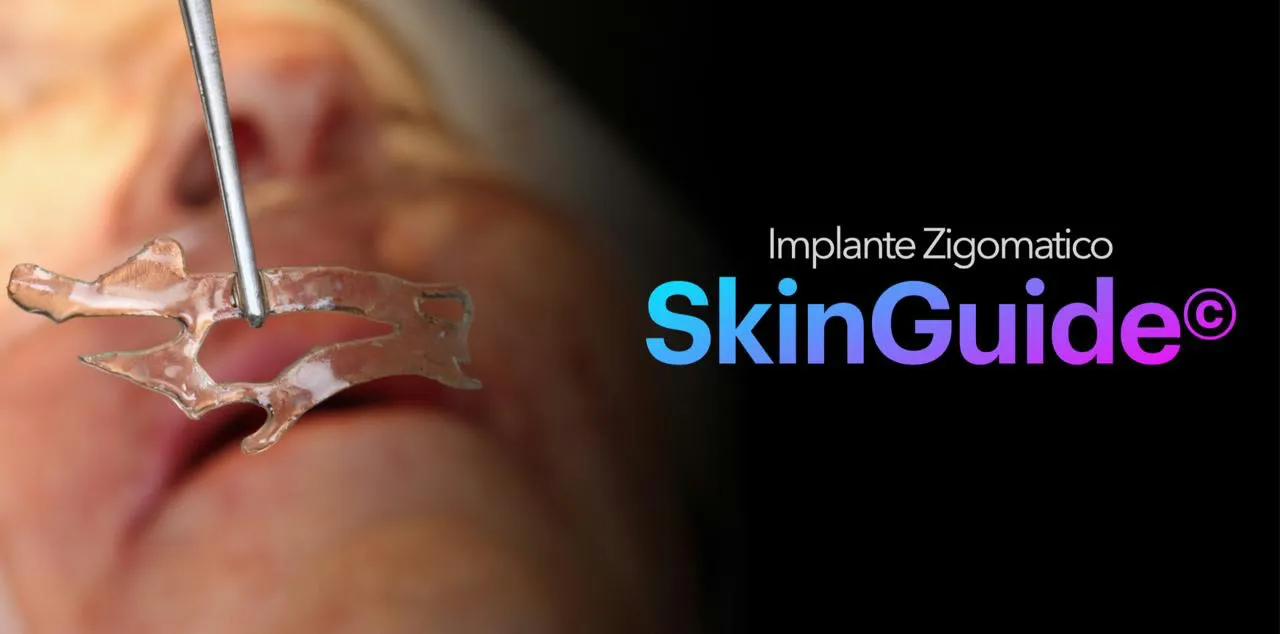
A custom guide printed in biocompatible resin fits into your mouth and transfers the simulated position exactly to the surgery. The drill doesn't improvise: it follows the planned path.
Only the last happens on you. By the time you walk into the room, your surgery has already been performed twice — on screen and on the replica of your bone. With no "let's see."
The SkinGuide®: the biocompatible resin guide that brings the simulation into your mouth.From virtual planning to the final X-ray — and to the smile of someone who can chew again.
Method developed by Dr. Fernando Giovanella · taught to surgeons in Brazil and abroad
So far, we've solved the bone problem — and only talked about the wonders of the fixed prosthesis. Now I need to be honest with you about the side almost no one mentions.
The detail no one tells you
There's a problem with the fixed prosthesis that almost no one tells you about. I'm going to tell you.
Up to now you've only heard the wonders of the protocol — and they're real. But to decide clearly, you also need to know the blind spot. And it has to do with your face.
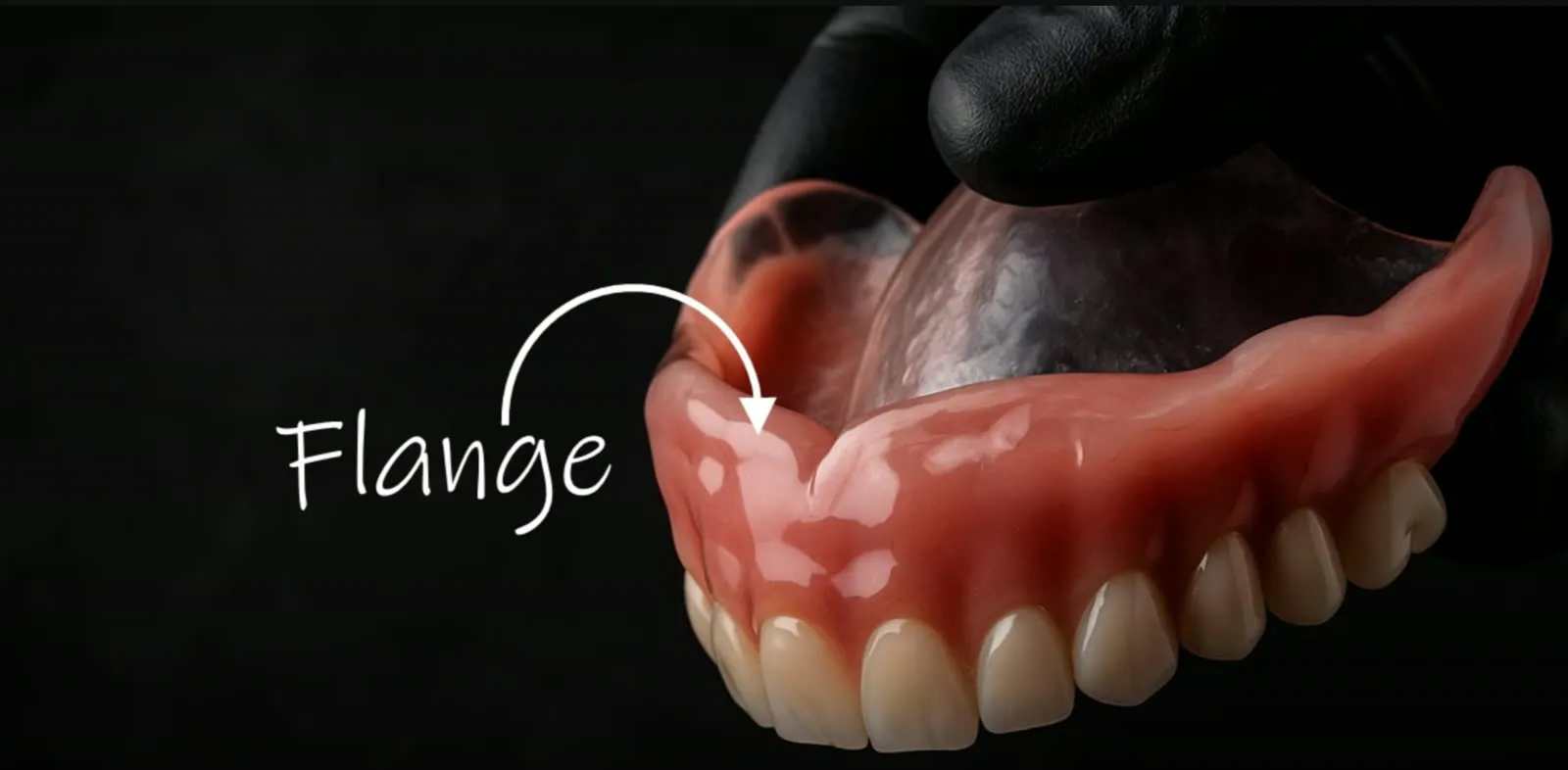
The flange: the pink rim of the denture that supports your lip from the inside.
First, understand the flange.
The denture (the removable full prosthesis) has a pink rim that hugs the gum — the flange. Besides holding the teeth, it's what pushes your lip and cheek back into place, compensating for the bone that was lost.
The fixed protocol is something else: it's fixed — it doesn't come out, it doesn't move, and it's only unscrewed by the dentist for an occasional cleaning. It's truly fixed teeth. That's why it has to be cleanable underneath.
That's why the protocol can never be designed like a denture.
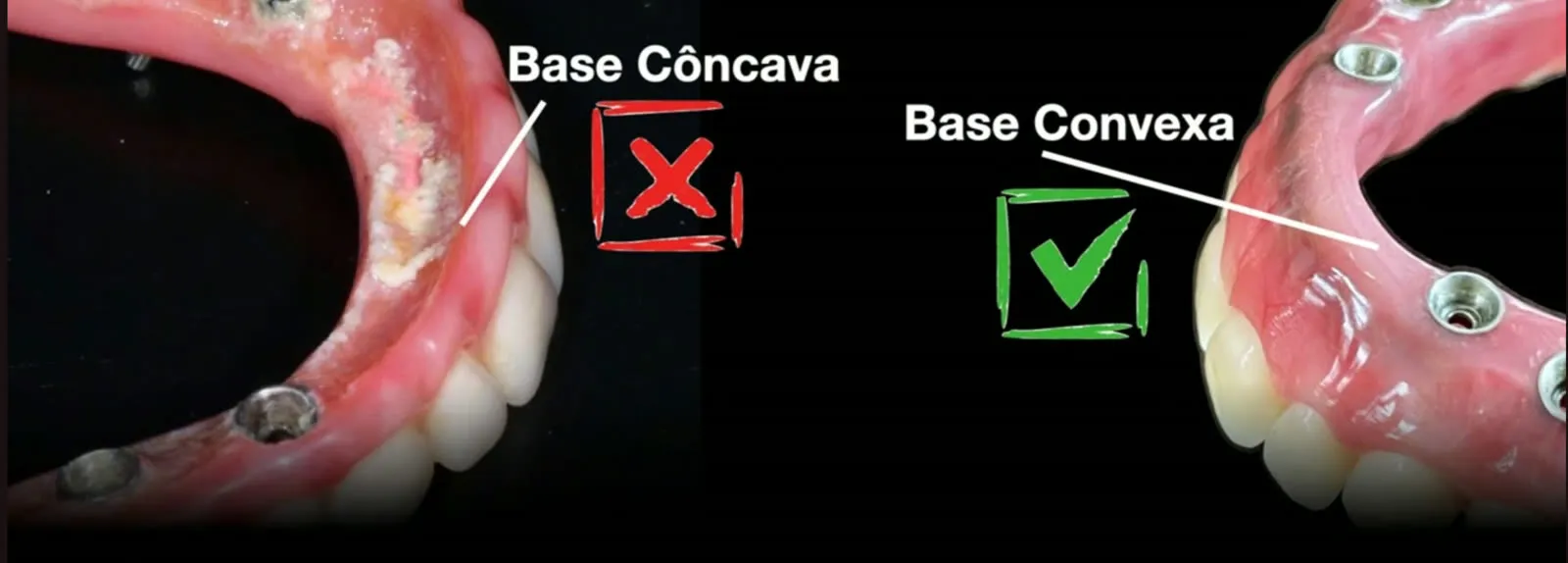
Precisely because it stays fixed and must be cleaned underneath, the protocol cannot have the denture's flange — and its base must be convex, smooth, so the brush and the water flosser can pass beneath. A concave base, closed like a denture's, would be impossible to clean.
The side effect: removing the flange so it can be cleaned also removes what was supporting your lip.
Convex base (the correct one): the only one that allows real hygiene under a fixed prosthesis.
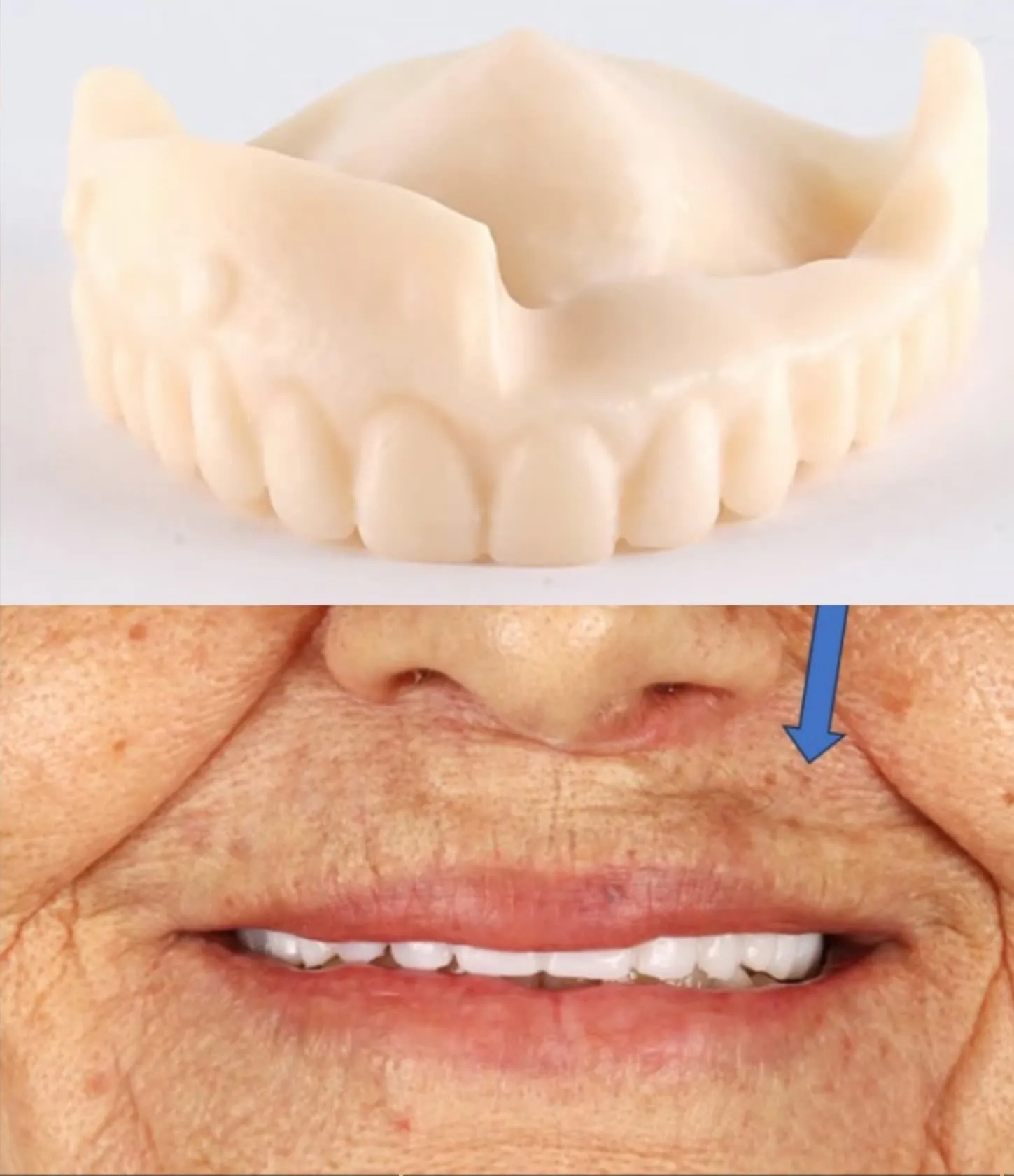
The proof, in a single test. On this copy of the denture, we removed half the flange. The blue arrow shows what happens: on the side without the flange, the lip loses support and the face sinks. That's exactly the support a poorly planned fixed prosthesis takes away from you.
This is the blind spot Dr. Fernando Giovanella faced head-on, creating the FaceFirst approach: planning starts with your face — how much support your lip needs — and only then designs the prosthesis (thin, convex, hygienic) and the implant positions. From the outside in: the best of both worlds — the hygiene of a fixed prosthesis and the support of your face.
We don't start with your bone. We start with your face.
Facial support, restored — without giving up a fixed, hygienic prosthesis.
Published approach · Journal of Prosthetic Dentistry
This approach isn't opinion: it was documented in a real clinical case and published in the Journal of Prosthetic Dentistry — one of the most respected journals in dentistry worldwide, peer-reviewed by international specialists.
Giovanella F. Graftless complete arch rehabilitation using a facial approach for enhanced bone anchorage and prosthetic outcomes: A clinical report.The Journal of Prosthetic Dentistry. 2025;134(2):295.e1–295.e6.
DOI: 10.1016/j.prosdent.2025.03.046 · PMID 40221273 · view on PubMed →
Her face changed twice: when it lost support — and when it got it back.
This is the most important part of the whole page. If there's one video worth your attention, it's this one: the full story, told by Dr. Fernando Giovanella himself — from the problem no one saw to the scientific publication. (in Portuguese)
▶ The detailed explanation is in the video. Set aside 11 minutes and watch to the end — it's what separates "getting the gist" from truly understanding why your face matters as much as your teeth.
The story of the FaceFirst approach — from the case to the JPD
Beautiful theory is easy. See what happens when it meets real people.
The proof
Real results. Real cases.
Patients who arrived with a "no" — and left with fixed teeth.
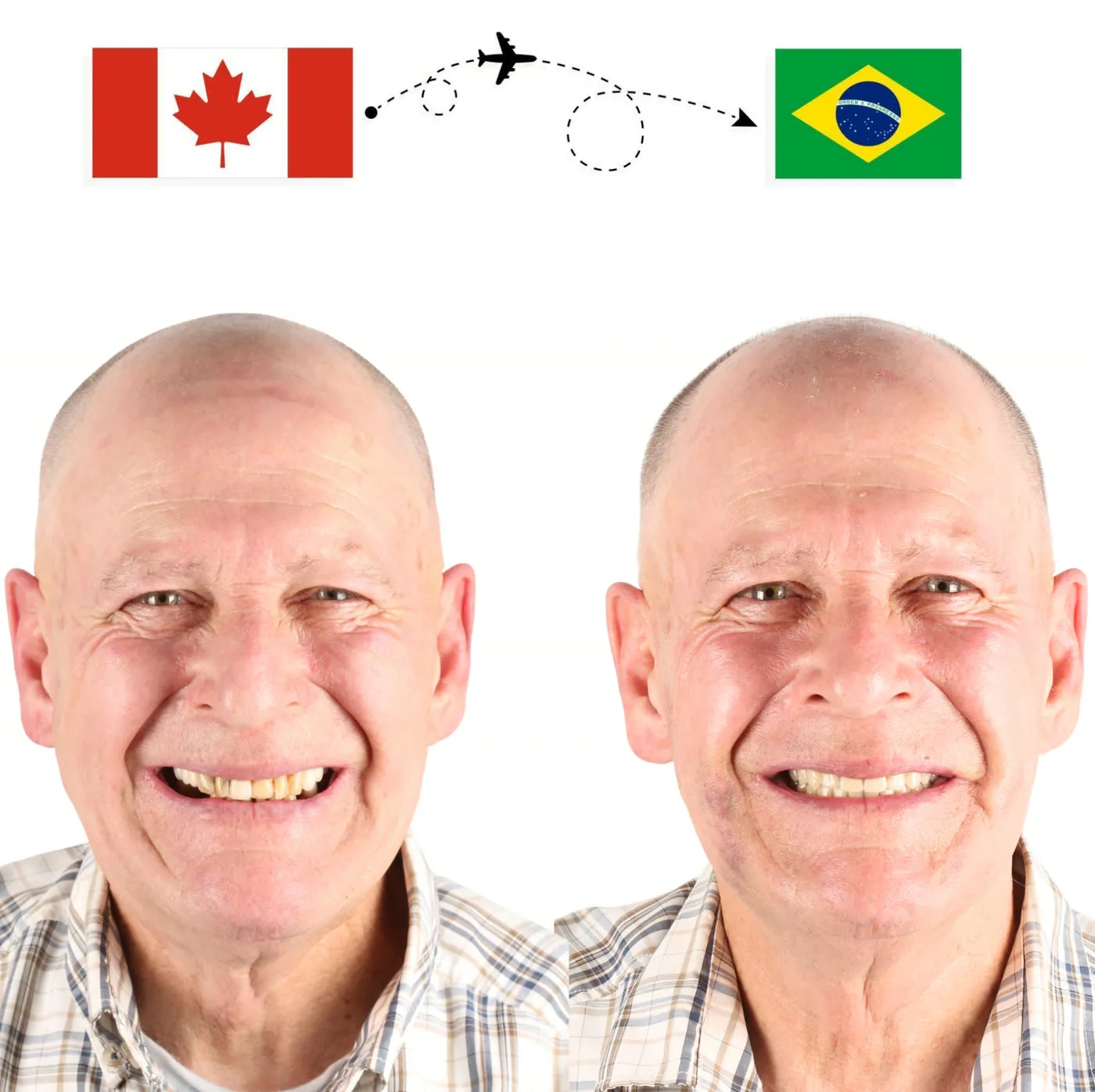
Fixed teeth on implants — smile and chewing restored.Smiling again, without hiding her mouth.Full rehabilitation with the FaceFirst approach.Full rehabilitation — fixed teeth in a few days.From Canada to Blumenau.The smile restored — and facial support preserved.From the USA to Blumenau: treatment in just a few days.Back to chewing and smiling — fixed teeth on implants.
The natural question now is: "will this work for my case?"
You're probably a candidate if…
“
"They told me I needed a graft."
Too little bone is our specialty.
“
"I wear a denture and want something fixed."
From a removable prosthesis to a fixed arch.
“
"I've had implants that failed."
Revisions and complex rehabilitations.
“
"I have advanced bone loss."
Zygomatic anchorage doesn't depend on the bone you've lost.
“
"I want to solve this fast."
A protocol of days, not years.
If you recognized yourself in any of these, the path from here is simpler than it seems.
The path
Three steps. That's it.
STEP 1
Assessment & digital planning
CT scan + 3D reconstruction of your case. You understand the whole plan before deciding anything.
STEP 2
Surgery with maximum safety
In most cases, in our own surgical suite, with intravenous sedation supervised by a physician anesthesiologist or oral sedation — no hospital stay. Selected cases go to a hospital setting.
STEP 3
Fixed teeth
Fixed prosthesis placed in a few days; the definitive one comes after healing.
And if, even understanding all this, your thought is still "I just wish I could fall asleep and wake up with it done" — the next block is for you.
For those who are afraid, prefer to sleep — or need extra medical care
Want to do it all asleep? You can.
Some of our patients put this treatment off for years — not because of the cost, but because of fear. If that's you, read slowly: this section exists for you.
We work with a partner medical anesthesiology team and offer intravenous sedation in our own outpatient surgical center: a physician anesthesiologist dedicated exclusively to you, from start to finish, with continuous monitoring and all legal and sanitary requirements met.
In practice: you receive the medication through a vein and fall peacefully asleep while the team works — many patients say they don't even remember the procedure. Sedation with an anesthesiologist is also indicated for patients with health conditions that call for medical monitoring. And for those who prefer — or, in some cases, need more intensive monitoring for full safety — there's the option of general anesthesia in a hospital setting.
And it's optional. Many surgeries are done comfortably with local anesthesia alone — sedation with an anesthesiologist comes in when you want it, or when your case calls for it. It's not mandatory for everyone, and we decide together at the assessment.
Outpatient anesthesia — video from our partner medical anesthesiology team. (in Portuguese)
Before we talk about who will do this for you, it's worth putting together the pieces of what you've just read.
The model
What we do differently — and why am I telling you all this?
Precision, exclusivity and comfort brought together in one place — a method whose approach is published in the Journal of Prosthetic Dentistry, led by a surgeon who is an Oral & Maxillofacial specialist and Master in Implant Dentistry, with over 20 years of experience — author, professor and speaker on advanced full-arch techniques.
You may know the high-volume model: assessment with one professional, surgery with another, the prosthesis with a third — and, at every visit, a new face asking your name. For simple cases, it can even work. For complex rehabilitations, every handoff is a chance for something to be lost.
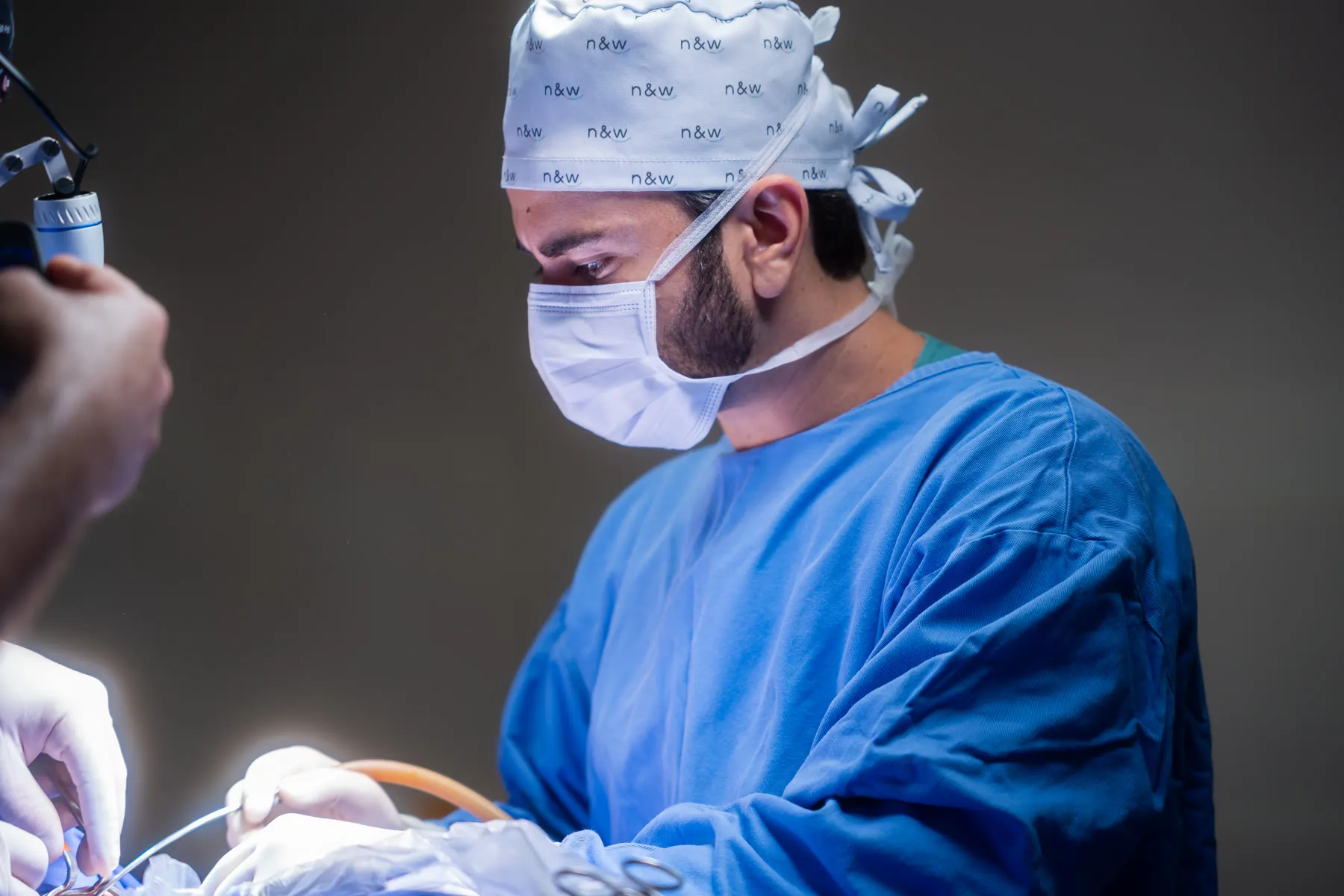
Here, the model is the opposite. Whoever assesses your case is who plans it. Whoever plans is who operates. Whoever operates is who places your prosthesis and follows every review: Dr. Fernando Giovanella himself. From the first exam to the definitive smile, your commitment is with one person — and so is the responsibility for your result.
And why open the entire method on one page? Because everything you've read here — the SkinGuide®, FaceFirst, the surgery simulated and rehearsed before the day, sedation with a medical team — was built by Dr. Fernando Giovanella to answer the questions real patients ask. A real method isn't afraid of the light. A well-informed patient chooses better — and that's the patient we want to care for.
And all of this carries one person's signature. It's time you met him.
Who will care for your case
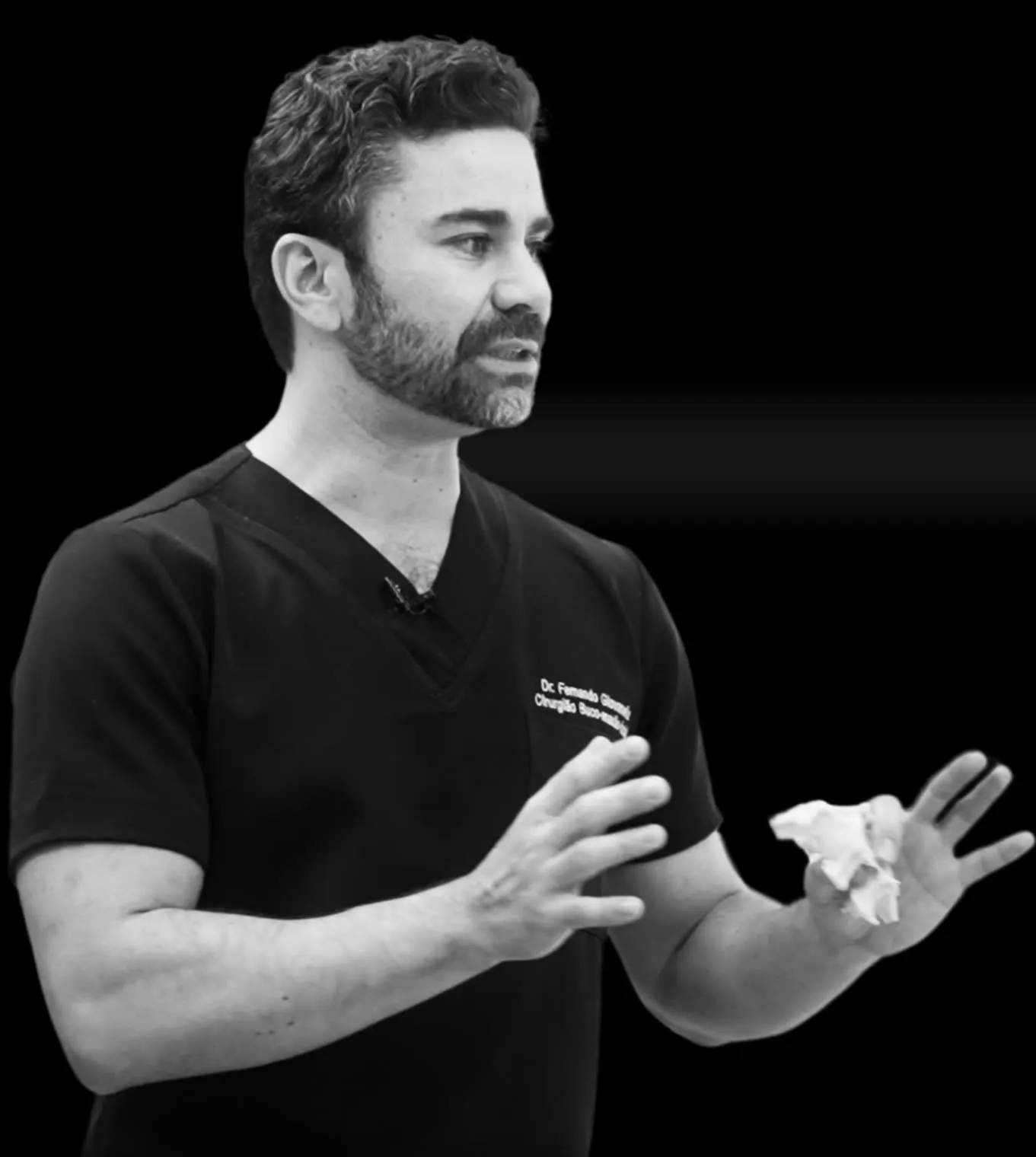
Dr. Fernando Giovanella
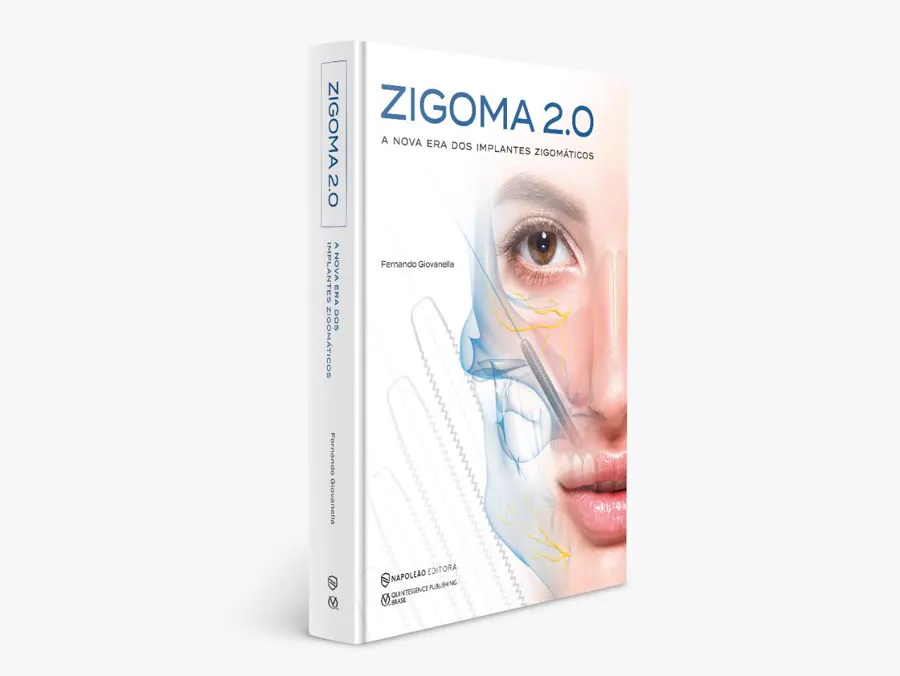
Oral & Maxillofacial Surgeon (UFPel) and Master in Implant Dentistry (USC Bauru), with over 20 years of experience. Author of the book Zygoma 2.0 — The New Era of Zygomatic Implants, the reference on the technique.
Creator of the SkinGuide® method and the FaceFirst approach — published in the Journal of Prosthetic Dentistry. Speaker at the INN Congress and professor of advanced full-arch techniques in Brazil and abroad — with a practice dedicated precisely to the cases many consider impossible.
Coordinator of the Implant Dentistry specialization program at IOA Blumenau · Professor of zygomatic implants at Expert Dental Solutions — Universidade Federal Fluminense (UFF), Niterói, Brazil.
He wrote the book on the technique. Literally.
Zygoma 2.0 — The New Era of Zygomatic Implants (Napoleão / Quintessence Publishing): the reference work on the technique that gives fixed teeth back to those who have no bone — written by the surgeon who will care for your case.
More than 100,000 people follow his channel, where he explains the technique openly, case by case.
Also for dentists
He teaches those who operate.
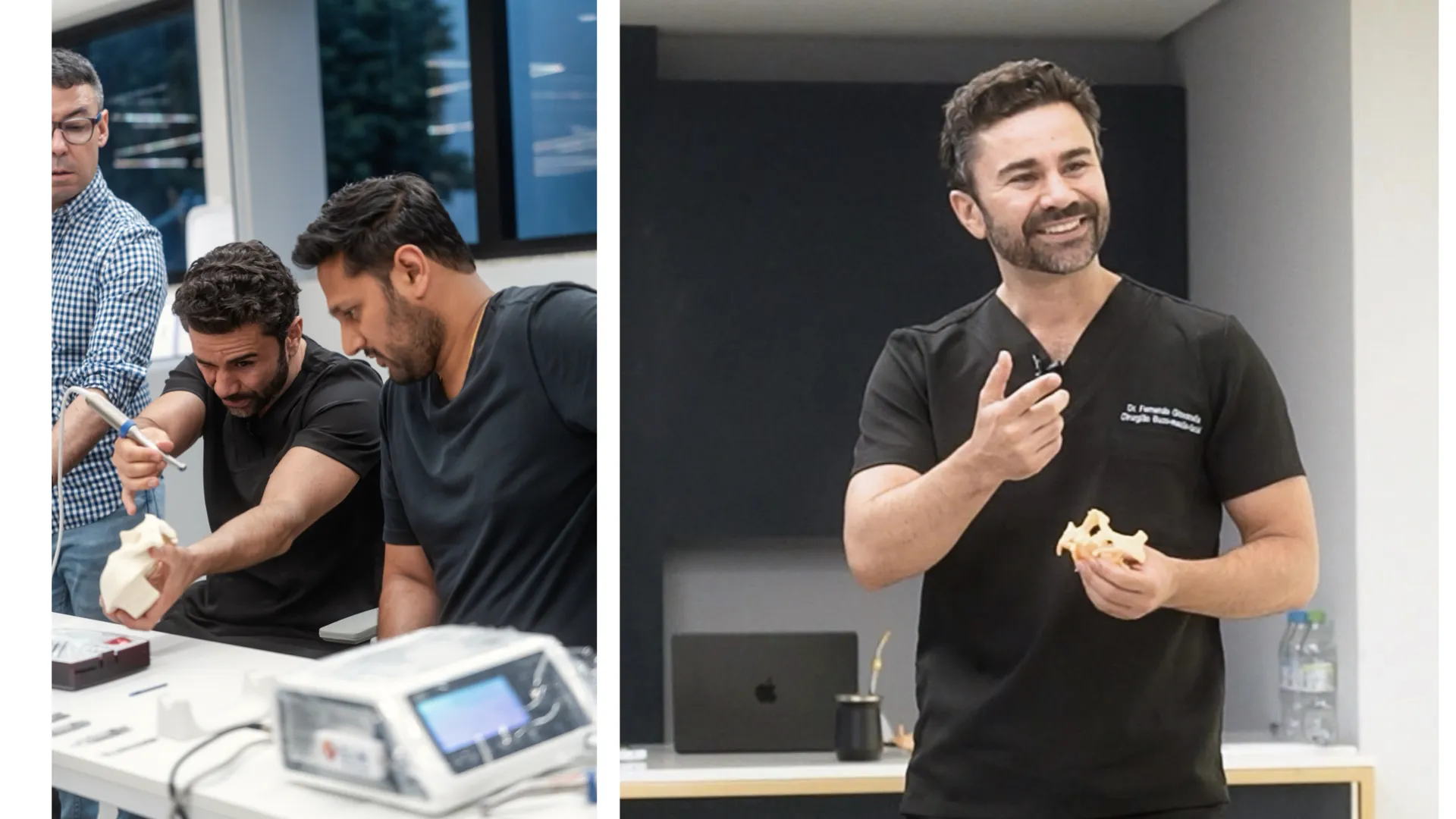
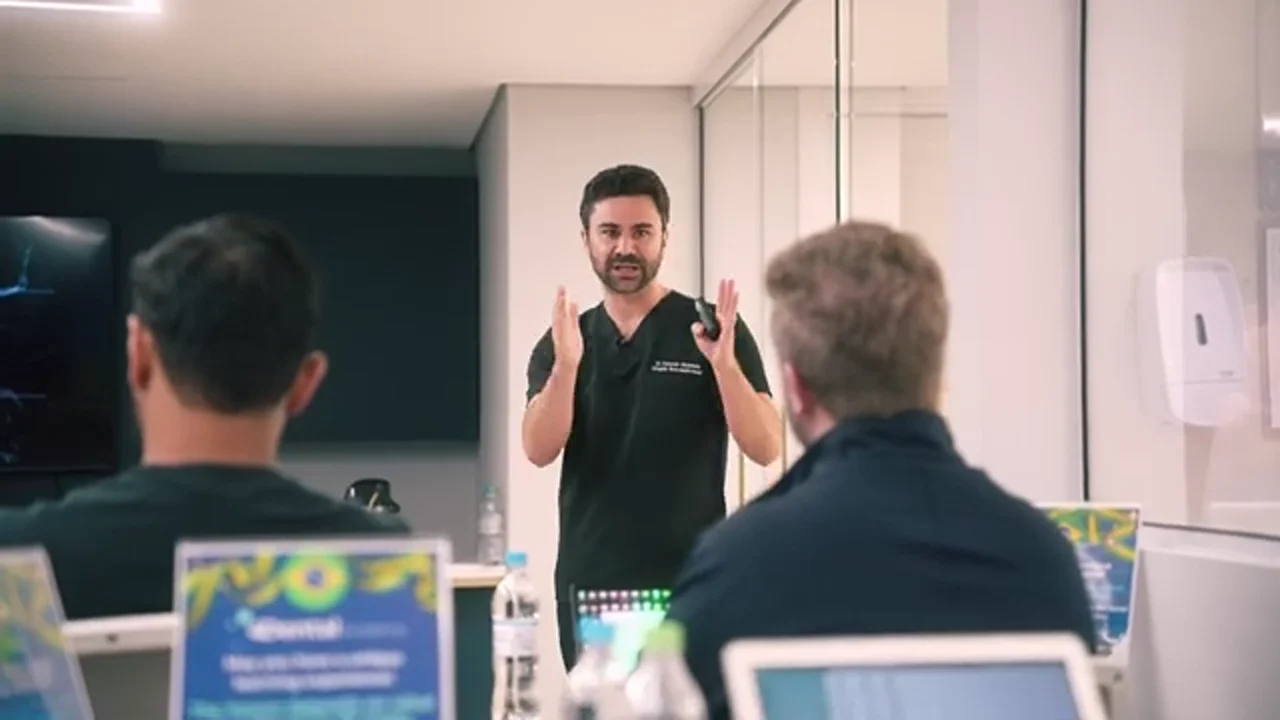
Dr. Fernando Giovanella teaches dentists from Brazil and abroad on advanced zygomatic implant techniques. Watch the video below to hear what dentists from the United States say about him.
Hands-on zygomatic implant courses — classes in Brazil and abroad.
What the colleagues who know the subject best say about him.
Dentists from the United States who studied the technique with Dr. Fernando Giovanella talk about the method and the results. (video in English)
▶ What U.S. dentists say — watch whenever you like.
U.S. dentists on Dr. Fernando Giovanella
You already know the method and the surgeon. Now meet the place.
Facilities
High-complexity surgery calls for facilities to match.
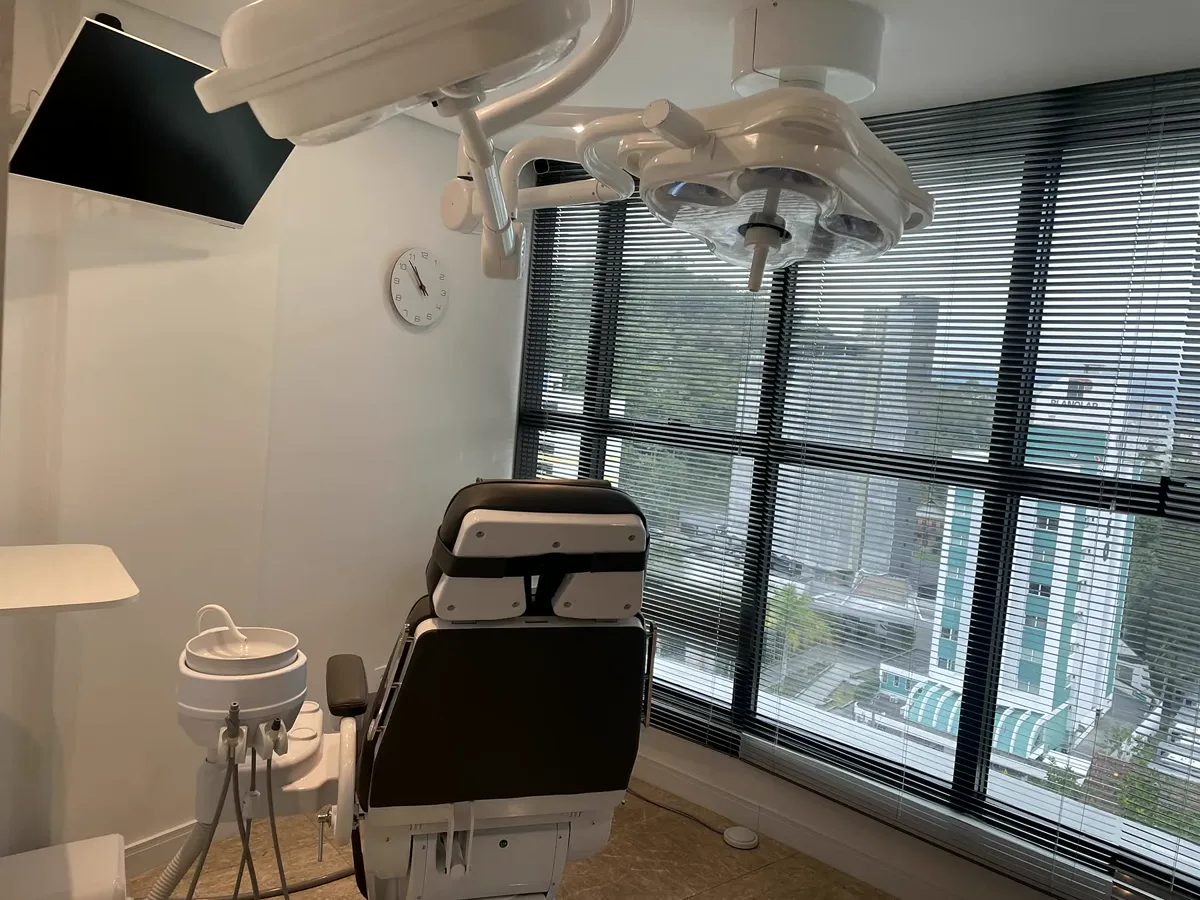
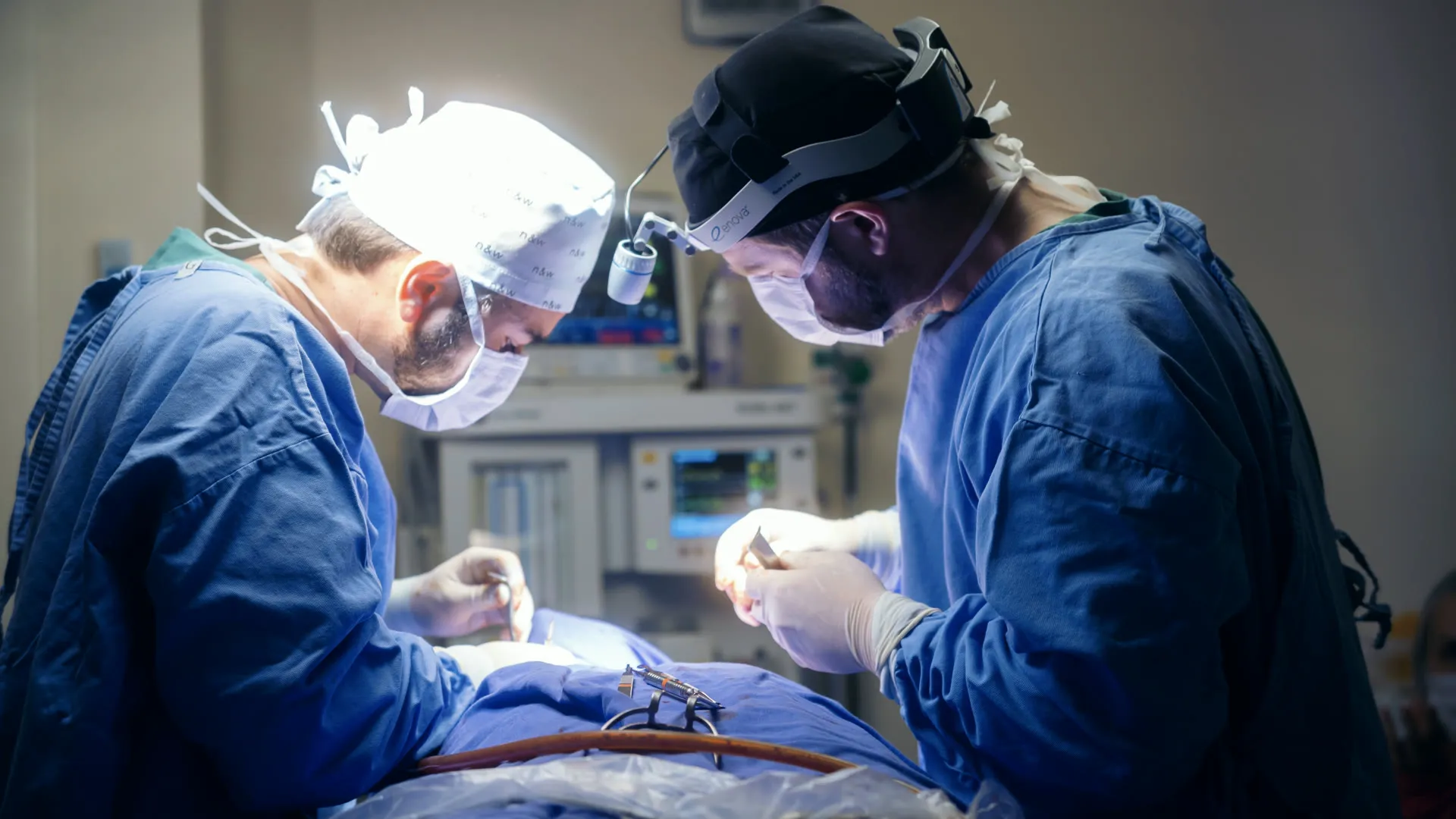
The clinic has its own surgical suite, specific to advanced dental surgery — where most cases are handled with intravenous sedation assisted by a physician anesthesiologist, with no hospital stay. Selected cases are performed at Hospital Unimed Blumenau (ISO 9001/14001): more complex and longer surgeries, patients with relevant systemic conditions, or those who prefer general anesthesia.
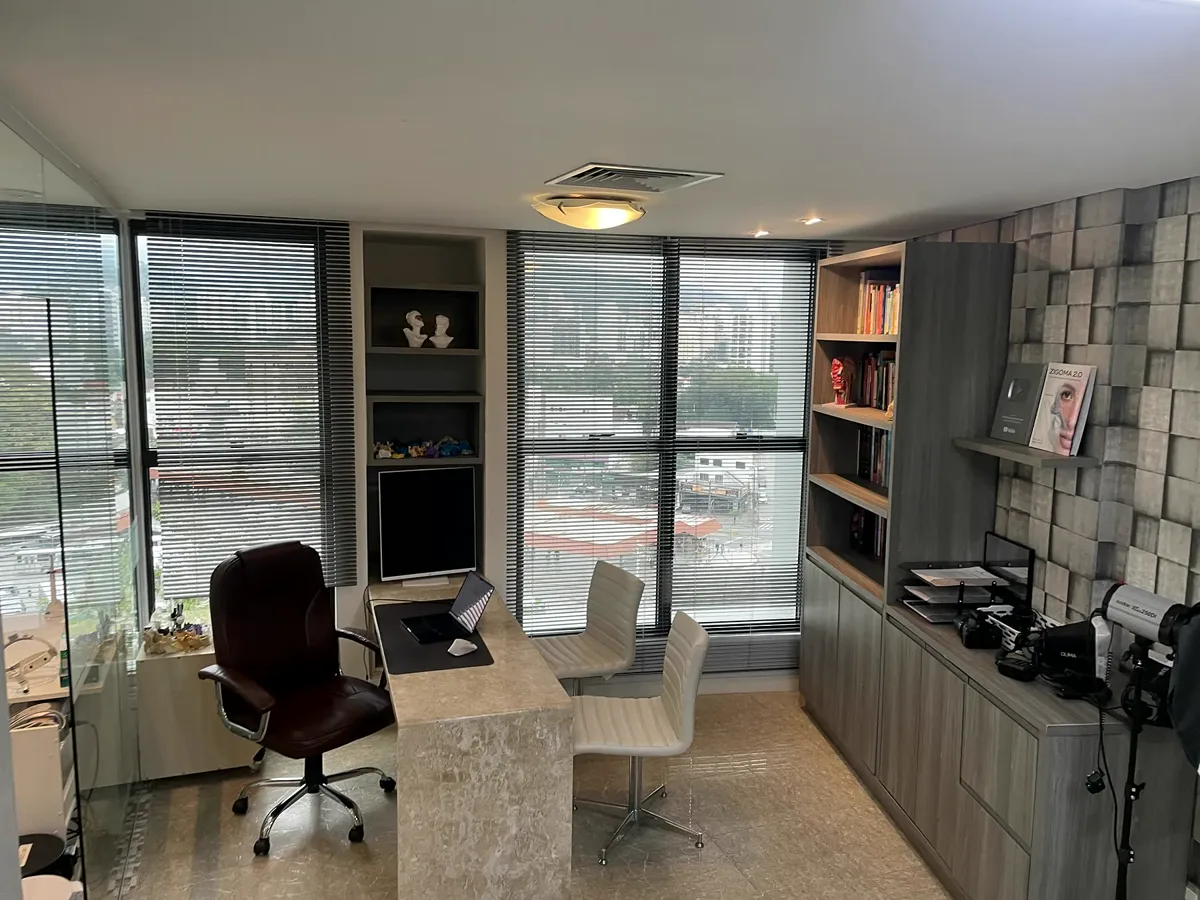
Clinical room — Blumenau.Care: one patient at a time.Hospital Unimed Blumenau — for the cases that call for it.
Now hear from those who've already been through it.
Patients from Brazil and around the world
Some people cross the country — and the world — to be treated in Blumenau.
Those who've been through it tell it better than any text. Tap to watch the testimonials:
🇧🇷 Graft vs. zygomatic · PT
She lived both paths — the iliac bone graft and the zygomatic. And she tells the difference. (in Portuguese)
The story of someone who came from Canada to be treated in Brazil. (Instagram · English)
Coming from abroad? Here's exactly how it works.
Coming from abroad
From your home to fixed teeth: how it works when you travel.
You find out whether you're a candidate before you book a single flight.
STEP 1
Send your CT scan
A recent CBCT scan of your jaws (the DICOM files), by WhatsApp or email. It's the only way to know if you're a candidate.
STEP 2
Online consultation
A private video consultation with Dr. Fernando Giovanella himself, with a professional fee. He goes through your scan with you.
STEP 3
Your written plan
He plans your case on the CBCT and sends you a written treatment plan: what will be done, how many days you'll need in Blumenau, and the cost.
STEP 4
Your trip
Surgery and fixed teeth in the same stay, usually 3 to 5 days after surgery. The definitive prosthesis comes after healing; your plan explains when.
VisaCitizens of the United States, Canada and Australia need a Brazilian e-Visa, applied for online. Allow about a week, and check the official requirements for your passport.
AirportNavegantes (NVT) is about 1 hour from Blumenau, with daily connections through São Paulo. Florianópolis (FLN) is about 2 hours away.
Paying from abroadIn US dollars, via Wise or PayPal. The details come with your treatment plan.
Language and logisticsWe attend you in English, and our team helps with the logistics of your stay.
Still have questions? They're probably already answered here.
Frequently asked questions
Does it hurt?
The surgery is done under sedation or anesthesia — you don't feel the procedure. Afterward, a medication and care protocol keeps discomfort under control; most patients report far less than they expected.
Is an implant in the facial bone safe?
Zygomatic anchorage has been used for decades in the world's major centers. Here, every case is planned in 3D, rehearsed on the printed prototype of your bone and guided by the SkinGuide® — the path is defined before surgery, not during.
How long until I have fixed teeth?
Generally, fixed teeth are placed 3 to 5 days after surgery. The exact timeline for your case is defined in planning.
"I have no bone at all." Am I still a candidate?
These are exactly the cases we focus on: the zygoma doesn't resorb. A CT-scan assessment confirms your case.
Can it also be done on the lower arch (mandible)?
Yes. The fixed protocol prosthesis can also be done on the lower arch (mandible) — in that case, with conventional implants. Zygomatic implants are used only on the upper arch (maxilla), where the cheekbone is.
I have diabetes / high blood pressure. Can I have surgery?
Many systemic cases are manageable with proper assessment and preparation — including hospital facilities when indicated.
Is there an age limit?
There's no absolute limit — what decides is your overall clinical condition, assessed case by case.
How is the implant-supported prosthesis cleaned?
Because the prosthesis is fixed and has a convex base (smooth underneath), cleaning is done at home, daily, passing the brush and especially the water flosser (oral irrigator) beneath the prosthesis, around the implants — that's what keeps the area healthy. At maintenance visits, the dentist unscrews the prosthesis for a periodic deep cleaning.
What's recovery like?
Guided rest and diet in the first days; most people resume light activities within a few days. The instructions for your case are defined in planning.
How long does a zygomatic implant last?
The scientific literature shows high success rates in long-term follow-ups. As with any health treatment, the individual result depends on maintenance and follow-up.
Do I need general anesthesia?
In most cases, no — intravenous sedation with a physician anesthesiologist (or oral sedation) in our outpatient suite. Hospital general anesthesia is an option for selected cases.
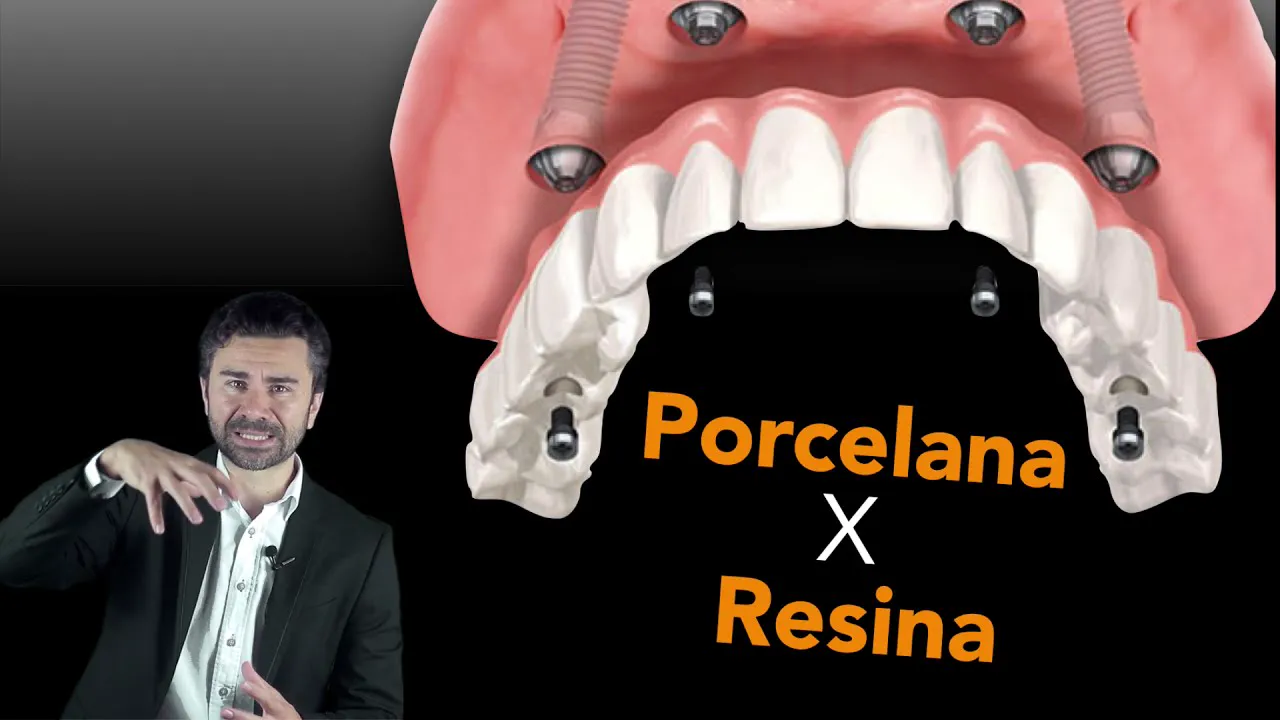
Is the definitive prosthesis acrylic or porcelain? Which is better?
Both exist and have pros and cons — esthetics, wear, weight, repair and cost. The choice is individual, defined in planning.
Acrylic vs. porcelain — the full answer on video (in Portuguese)
How much does it cost?
Every case is unique; the price is defined after the assessment and planning of your case.
Do you treat patients from other cities and countries?
Yes — the protocol concentrated into a few days was designed for those who travel. Our team helps with the logistics.
You've made it this far. All that's left is a conversation.
Your case deserves a second opinion — from someone who treats the complex every day.
No obligation and no pressure: it starts with a message and ends with a clear plan for your case.